MVP: Meaning and How to Test an Idea Before Launching a Startup

You have an idea that keeps you up at night. You’re convinced it could work, that it could solve a real problem, maybe even disrupt an entire industry. But how do you know if the market agrees with you?
The answer lies in three letters that every aspiring entrepreneur should know: MVP. An approach that allowed startups like Dropbox, Airbnb, and Zappos to validate their ideas before investing millions, and one you can apply too, starting from zero, to transform an intuition into a product people actually want.
MVP meaning and why it is widely used in the startup world
In the startup ecosystem, few acronyms are as ubiquitous as MVP. But what does it actually mean? MVP stands for Minimum Viable Product, the simplest version of a product that can be released to the market to gather real feedback from users.
The core idea behind the MVP is elegantly simple yet incredibly powerful: instead of spending months (or years) developing a complete product, you build an essential version that allows you to validate your business hypotheses with minimal effort.
The concept was popularized by Eric Ries in his book “The Lean Startup,” though its roots lie in design thinking and agile development philosophies. Today, virtually every accelerator, incubator, and entrepreneurship program teaches the importance of starting with an MVP.
Why? Because building a product nobody wants is the fastest way to burn through time, money, and motivation. The MVP exists precisely to avoid this mistake.
Why testing an idea is essential for anyone building a business
Launching a startup without validating your idea is like sailing without a compass. According to CB Insights, 42% of startups fail because there’s no market need for their product. Nearly half of entrepreneurial ventures collapse due to a problem that could have been identified before investing significant resources.
Testing an idea through an MVP allows you to reduce financial risk by investing only in the essential features needed to gauge market response. It enables you to learn quickly, as every interaction with real users provides valuable data to improve the product or change direction. It helps you save time by discovering early that an idea doesn’t work, allowing you to pivot before burning months of effort. Finally, it helps attract investors, since an MVP with traction demonstrates that the idea has potential.
Testing isn’t a sign of weakness or uncertainty: it’s the smartest approach to building something solid. Those who can analyze data and make strategic decisions have an enormous competitive advantage. If you want to dive deeper into how data drives business decisions, read the article on data mining and how data reveals value.
Experiment early to reduce risks, costs, and uncertainty
The principle of “fail fast, learn faster” lies at the heart of the startup mindset. Experimenting early means accepting that the first versions of a product will be imperfect, and that these very imperfections generate the most valuable insights.
When building an MVP, the goal isn’t to impress but to learn. You’re trying to answer fundamental questions: Do potential customers understand the value proposition? Are they willing to pay? Which features do they consider essential and which are superfluous?
This approach dramatically reduces development costs. Instead of hiring a full team for months, you can validate an idea with accessible tools and limited budgets. Many successful startups were born from MVPs built in just weeks with minimal resources.
Uncertainty is inevitable in any entrepreneurial project, but it can be managed through rapid cycles of build-measure-learn: build something, measure the results, learn from the data. Each cycle brings the product closer to what the market truly wants.
From idea to first testable product: how an MVP works in business
Moving from an abstract idea to a concrete MVP requires a structured process.
Defining the problem comes first. Before even thinking about the solution, you need to clearly understand what problem you’re solving and for whom. An effective MVP emerges from a deep understanding of a real need.
Identifying key hypotheses follows immediately. Every business idea rests on assumptions: “Customers will pay X for this service,” “Users will prefer our solution to existing alternatives.” The MVP serves to test these hypotheses.
Choosing essential features requires discipline. The temptation is always to add more features, but an MVP should contain only what’s strictly necessary to test the main hypotheses. Less is more.
Building rapidly is crucial. Whether it’s a landing page, a clickable prototype, or a beta version of software, speed matters. An imperfect MVP today is worth more than a perfect product six months from now.
Gathering feedback means putting the MVP in front of real users and carefully listening to their reactions. Quantitative metrics and qualitative feedback are equally important.
Iterating or pivoting is the final step. Based on the collected data, you decide whether to improve the product in its current direction or change course completely.
MVP startup examples: simple ways to validate a digital product through tests and real feedback
You don’t need to be an expert programmer to create an effective MVP. Here are practical approaches that have worked for now-famous startups.
The Landing page MVP is the simplest. Before building anything, create a web page that describes the product and invites users to sign up. If no one signs up, perhaps the idea isn’t that interesting. Buffer, the social media management tool, started exactly this way: a simple landing page to test interest.
The Concierge MVP involves offering a service manually instead of automating it. Food on the Table, a meal planning service, began with founders creating personalized meal plans one by one.
The Wizard of Oz MVP makes users believe they’re interacting with an automated system, while behind the scenes, a person manages everything. Zappos, before building the e-commerce platform, photographed shoes in stores and shipped them manually when orders came in.
The Video MVP uses a video showing how the product will work to validate interest before building it. Dropbox collected thousands of sign-ups with a simple demonstration video.
The No-code prototype leverages tools like Figma, Webflow, or Bubble to create functional prototypes without writing a single line of code.
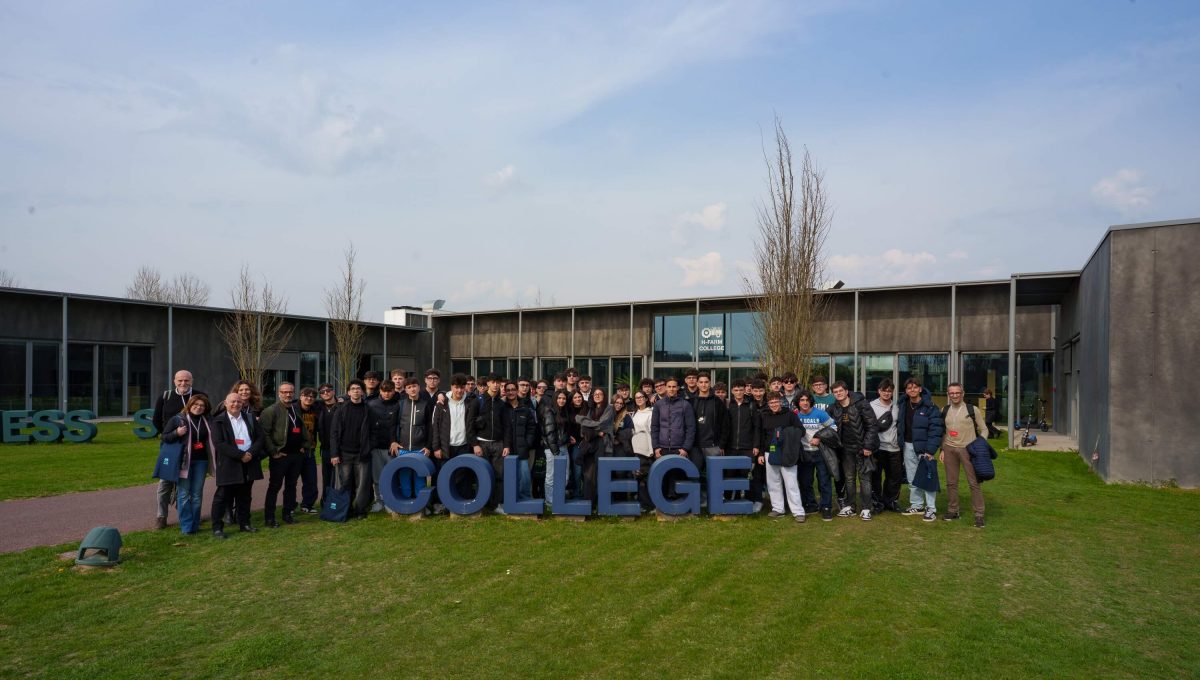
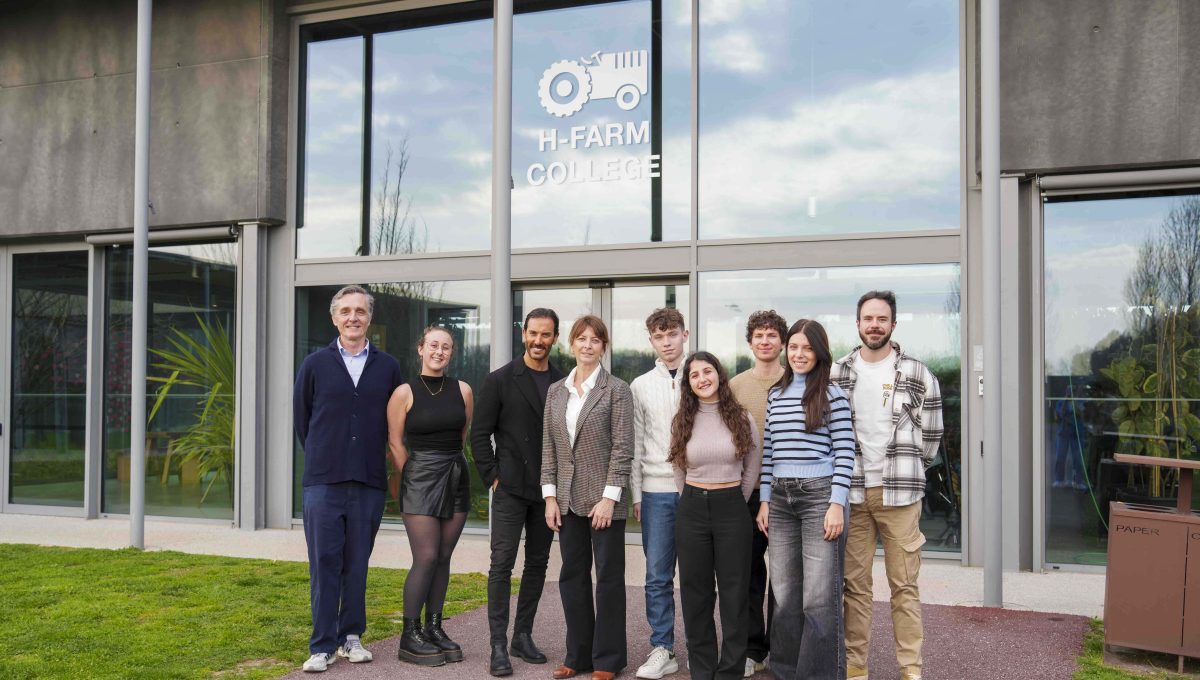
In H-FARM College’s degree programs, the MVP concept isn’t just an exam topic, it’s an everyday working tool. Students develop real projects, build prototypes, test them with actual users, and learn to iterate based on feedback. Some of these projects have become real startups, as you can see on the Entrepreneurship & Startup Center page. It’s an environment where failure is part of the process and every setback is an opportunity for growth.
So what are you waiting for? Join H-FARM College and build your future with us!
The most common mistakes when trying to validate a product
Even with the best intentions, it’s easy to fall into traps that compromise the validation process.
Falling in love with your idea is the most common mistake. Confirmation bias leads us to seek only positive feedback and ignore warning signs. A good entrepreneur must be the first critic of their own product.
Building too much is another frequent error. The “let’s add one more feature” syndrome is deadly. Every additional functionality increases costs and delays the moment of truth.
Asking the wrong people compromises results. Friends and family aren’t the ideal target for testing a B2B product. You need to reach real potential customers.
Ignoring the data makes all the work pointless. Collecting feedback is useless if you don’t act on it. Too many founders continue on the same path despite negative data.
Waiting for perfection blocks the launch. “It’s not ready yet” is the most common excuse for never launching. But an MVP by definition doesn’t have to be perfect.
Confusing interest with purchase intent is a subtle mistake. “Cool idea!” doesn’t mean “I would pay for this.” Only the payment test reveals true interest.
What you learn by working on a real idea, even if it changes direction
The value of an MVP lies not only in validating an idea but in the learning that comes from it. Even when a project fails or completely changes direction, the skills acquired remain.
Working on a real idea teaches you to think like an entrepreneur: identifying problems, proposing solutions, testing hypotheses, managing uncertainty. These are transferable skills that have value in any career, from Business Development Manager to product manager.
The pivot, or change of direction, is not a defeat. Some of the world’s most successful startups were born from radical pivots: YouTube was a dating site, Twitter a podcasting service, Slack an internal tool for a gaming company.
Every iteration, every piece of feedback, every mistake builds a reservoir of experience that makes success more likely in the next project. Entrepreneurship is a journey of continuous learning, and the MVP is the tool that enables learning by doing.
Those who want to explore how to interpret data for strategic decisions can learn more about the role of Business Analyst, a figure increasingly in demand in the startup world.
Developing ideas and products through hands-on projects at H-FARM College
Theory matters, but it’s in practice that true entrepreneurs are formed. H-FARM College has built its educational approach around precisely this principle: students don’t just study startups, they create them.
In H-FARM College’s university programs, the MVP concept isn’t an exam topic but a daily working tool. Students develop real projects, build prototypes, test them with actual users, and learn to iterate based on feedback. It’s an environment where failure is part of the process and where every setback is an opportunity for growth.
The cross-pollination between different disciplines (technology, design, business, marketing) creates the ideal conditions for developing the entrepreneurial mindset that today’s job market demands.
Ready to turn your idea into a real project?
The Master’s Degree in Entrepreneurship, Startups and Innovation at H-FARM College is designed for those who want to move from theory to practice. On a campus immersed in innovation, you’ll work on real projects from day one, learn to build MVPs, validate ideas, and launch products to market. Discover the degree program and start your entrepreneurial journey!




FAQ


An MVP, or Minimum Viable Product, is a simplified version of a product created to test an idea on the market. It helps understand whether a problem is real and whether the proposed solution is truly interesting for users, before investing too many resources.
No. An MVP can be a landing page, a prototype, a demo, or even a manually tested service. What matters is not the technology itself, but the ability to collect real feedback from users.
Because it reduces risk. An MVP allows founders to learn from the market, refine the initial idea, and make decisions based on real data and experiences rather than assumptions.
Not necessarily. Today, no-code and low-code tools make it possible to build MVPs even without advanced technical skills. This makes the process accessible to students at the beginning of their journey.
Through hands-on experiences, project work, and real-world case studies. In educational environments like H-FARM College, students develop this experimental mindset by working on concrete ideas, products, and projects, even when they are not explicitly called MVPs.







 Back
Back

