
The Master’s prepares professionals capable of designing experiences, communicating brands effectively, and driving innovation in the world of digital design and communication. It is aimed at those who want to become visual designers, brand strategists, creative directors, or digital content specialists in companies, agencies, or startups.
MASTER’S DEGREE Design and Communication with AI
In partnership with:

Overview
The role of the art director is undergoing a profound transformation. It is no longer an isolated role, tied exclusively to creative intuition, but a set of skills spanning design vision, technology, branding and collaboration with interdisciplinary teams, increasingly supported by artificial intelligence. In this scenario, anyone aspiring to work in communication design must be able to combine creativity and method, master advanced technical tools and identify the most effective operational strategy for each project. It is an evolution that directly concerns anyone dreaming of a future through an art director course or a path oriented towards a master in visual design.
The Master’s Degree in Design and Communication with AI, awarded by the University of Chichester, was created precisely to meet these new needs. It is a programme designed to train professionals who can move confidently between communication, visual design, innovation and artificial intelligence. The programme offers a complete and up-to-date preparation, ideal for anyone looking for a design course that combines creativity, technology and strategy. Within the Master, students develop skills ranging from branding to the interface design typical of a UX design course, through to the production of multimedia content in line with a videomaking course, as well as photography and 3D. The goal is to shape the future digital art director: a professional who directs the image, identity, web, photography, video and 3D of a product, and who governs what AI generates rather than merely using it.
Communication design is today one of the most in-demand areas of the digital job market: it brings together graphic design, visual design and brand strategy in a single profile capable of giving shape and voice to brands. Those who choose a master in design focused on communication learn to design experiences, not just images, and to understand when automation is useful and when human craft is essential.
If you would like to understand how this programme can support your professional future in design and communication, you can request a no-obligation conversation with the H-FARM College Admissions Team and find out whether this master is the right choice for you.
Delivered by
H-FARM College
Degree
Master of Arts – University of Chichester (90 ECTS)
Language
English
Available spots
30
Tuition
€15,500.00 per year
Non-EU students: €26,350.00
Non-EU Student Grant
Non-EU students: €26,350.00
Non-EU Student Grant
Start date and duration
September 2027 (12 months)
Location
H-FARM Campus – Roncade (TV)
Class format
Full-time, in-person classes

0%
of the students complete the program within the expected timeframe
0%
of the students receive a job offer from the company where they completed their internship
0%
the average graduation grade
0+
meetings with guest speakers, startups, and CEOs every year
0%
of the students who decide to work after graduation, find employment within 6 months
Why Choose Our Master’s Degree in Design and Communication with AI
The aim of our programmes is to train the innovators and professionals of the future, building a preparation that combines creativity, technology, artificial intelligence and the strategic skills the industry truly demands. Within a contemporary approach to communication design, we focus on the skills most sought after by the job market, offering an experience that goes beyond the boundaries of a traditional design course.
To maintain a concrete link between education and profession, the Master relies on a faculty made up of professionals active in the leading industries of the sector. This allows students to work on real projects and to engage with the same dynamics they would encounter in an art director course, a master in visual design or in specialised paths such as a branding course, a UX design course or a videomaking course.
Throughout the programme, students have access to advanced equipment that allows them to explore every stage of the creative and production process with a practical, professional approach, designed for those who want to turn multidisciplinary skills into a real competitive advantage.
In the Master, AI is not just a tool to learn how to use, but a technology to evaluate and govern. In five modules out of six, every use of AI is recorded in a decision log that forms part of the assessment. Photography, by contrast, is deliberately taught without AI: it is the human anchor of the programme. The programme concludes with the Experiential Term, which takes one of three forms: a professional placement, a pre-accelerator project within the H-Farm Entrepreneurship & Startup Center, or a dissertation or practice-based research project.
The Master’s method is based on design thinking, a user-centred approach that puts people at the heart of every project and guides it from idea to prototype. You can learn more about what design thinking is and how to use it to innovate, the common thread running through the entire programme.
If you would like to understand how this Master could fit into your educational and professional path, get in touch: we are here to help you choose the right way forward.
Academics
The Master Degree’s Program
The programme is designed to offer a complete and up-to-date view of communication design, combining creativity, technology, strategy and artificial intelligence. Among the core topics is Visual Storytelling Techniques, which introduces students to building effective and engaging visual narratives, together with modules dedicated to UX/UI Design Principles and Designing for Mobile-First Experiences, essential for anyone who wants to develop the skills typical of a UX design course and design intuitive digital experiences optimised for mobile use.
Innovation remains a central pillar of the program with in-depth study of Virtual Reality (VR) in Interactive Design, Motion Graphics in Digital Marketing, Generative Pipelines and AI Post Production, fields that often connect with what would be studied in a videomaking course or a master in visual design, exploring rapidly evolving technologies and languages.
Another key element is Human-Centered Design, which puts people’s real needs at the centre, together with Cross-Platform Design Strategies, essential for creating consistent solutions across different channels and devices. These are complemented by topics such as Branding & Identity Design and Typography in Digital Design, areas that draw on the skills of a branding course and make it possible to develop strong visual identities and carefully crafted digital communications.
The program also takes a data-oriented approach through Data-Driven Design Decisions, teaching students to combine analysis and creative intuition in a conscious way. Crucial aspects such as Designing for Accessibility & Inclusion are also addressed, essential for designing for everyone. In the same way, Responsible AI: Authorship, Provenance & Ethics teaches students to evaluate and govern artificial intelligence rather than merely use it: every use of AI is recorded in a decision log, while photography is taught without AI, as the human anchor of the programme. The entire program is enriched by a strong hands-on component, with Prototyping & Design Iteration guiding students through the iterative stages of developing and improving their projects.
Thanks to this rich, multidisciplinary structure, the Master’s Degree in Design and Communication with AI prepares the future digital art director, a professional able to connect creativity, method and artificial intelligence, drawing on the skills of a design course, an art director course or more specialised paths such as UX, visual and video, and becoming a central figure in a constantly evolving industry. The programme concludes with the Experiential Term, which can be completed as a professional placement, a pre-accelerator project within the H-Farm Entrepreneurship & Startup Center, or a dissertation or practice-based research project.
Curriculum Master’s Degree in Product Design and Communication
AI Augmented Design Tools and Art Direction – 10 ECTS
In this module, students will learn to use the essential tools for creating digital presentations of a concept, a creative idea or a design object.
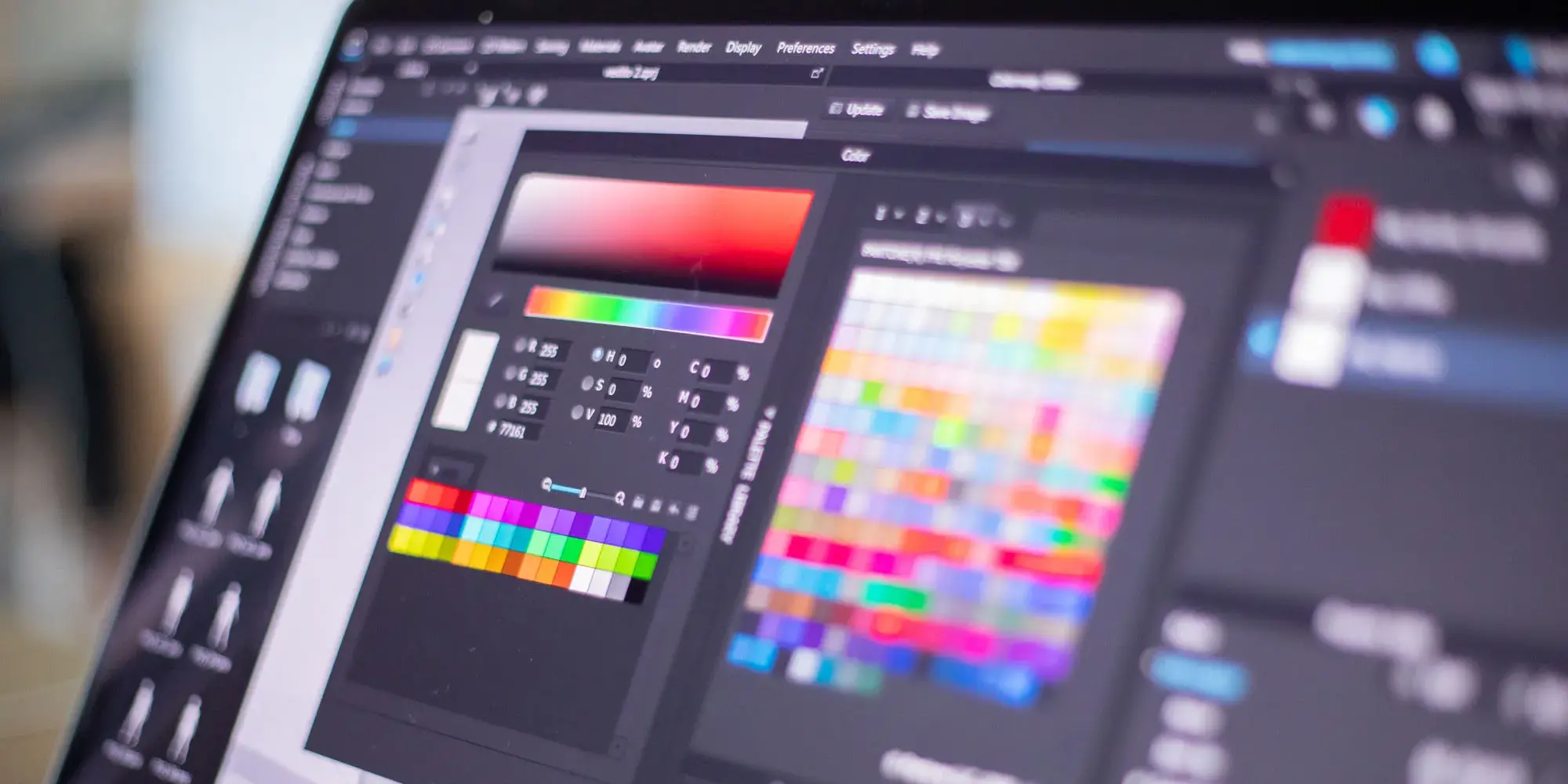
They will focus on the creation, processing and representation, in both 2D and 3D, of graphic objects and images.
They will acquire the skills to create digital or print presentations, using software for producing images, text and graphic layouts.
They will also learn to integrate generative and assistive AI tools into the creative process from an art director’s perspective: evaluating, selecting and directing what AI produces, and justifying every choice.
Brand Design and AI Enhanced Communication – 10 ECTS
What does branding mean? In today’s landscape, where social media channels are increasingly pushing companies to reinvent their visual identity, rebranding has become an everyday activity.
In this module, students will analyse the contemporary landscape to learn how to build and define a brand’s identity today, developing their own style and communication language.
Working alongside graphic designers, students will learn the fundamentals of brand equity, strategy and brand values, gaining a 360° view of identity design.
The module also explores the role of AI in brand communication, from creating and adapting content to building campaigns, towards a brand capable of learning and interacting with its audience.
Students will use graphic and layout software such as Adobe Illustrator, InDesign and Photoshop to create content such as logos, pictograms, vectors, images and fonts.
Web Design and AI Assisted Development – 10 ECTS
In this module, students will learn how to create websites and applications for both mobile and desktop devices using programming languages.
In the first part of the module, students will study HTML to define website content, followed by CSS to apply styling.
Students will progressively implement more interactive elements, creating more complex applications in JavaScript.
The aim of this module is to work on web design and development at the same time, in order to understand concepts such as information architecture, responsive design and accessibility.
Alongside writing code, students will use AI-assisted development tools, learning to critically evaluate their output in terms of quality and accessibility.
Photography – 10 ECTS
This module provides an in-depth look at the evolution of photography from both a historical and a technical perspective, offering a solid foundation on which to develop and evolve one’s photographic skills.
Strongly practice-oriented, the module supports students in developing technical skills as well as an understanding of how photography can be used as a means of communication.
Through the development of a photographic project, students will build skills in brand photography, portraiture, photography of moving subjects and narrative photography.
By design, it is the only module of the Master taught without AI: vision, technique and authorship remain entirely in the hands of the photographer.
Video Making and AI Post Production – 10 ECTS
Video advertising is a powerful tool for communicating brand values.
This module covers both the pre-production and post-production elements of filmmaking. Students will develop both their technical and artistic skills, learning the grammar and structure of the craft in order to become better storytellers.
Building on a solid technical understanding, students will work as part of a team to solve problems by implementing workflows for specific post-production scenarios. These workflows will involve working with a variety of assets, including audio, graphics, metadata and video, and integrating AI tools into post-production.
Digital Arts and Generative Pipelines – 10 ECTS
Digital Arts represents the new frontier of web content. With the growth of innovations such as the Metaverse and Artificial Intelligence, digital content creation is changing rapidly and continuously. Auction houses are selling virtual content, and fashion houses are choosing digital avatars as their brand ambassadors.
Creating digital artistic content requires broad knowledge ranging from 3D to rendering and digital animation. Over these four weeks, students will learn to work as digital artists, exploring the best-known techniques and tools used by contemporary 3D artists. Students will use software for 3D design, texture painting, photorealistic rendering, digital animation, AI-based generative pipelines and post-production, expressing themselves freely to find their own style and learning from faculty who are themselves professionals in the field and who will share their methods and hands-on experience.
Students will design advertising images for products, digital animations and virtual animations for the fashion, art and design industries.
EXPERIENTIAL TERM
Students have the opportunity to put into practice the skills acquired throughout their course of study by choosing one of the following three options:
–Internship project
An internship at a company or organization in Italy or abroad, accompanied by a one-week intensive course on research methods and on preparing the business project report and final pitch.
–Pre-accelerator
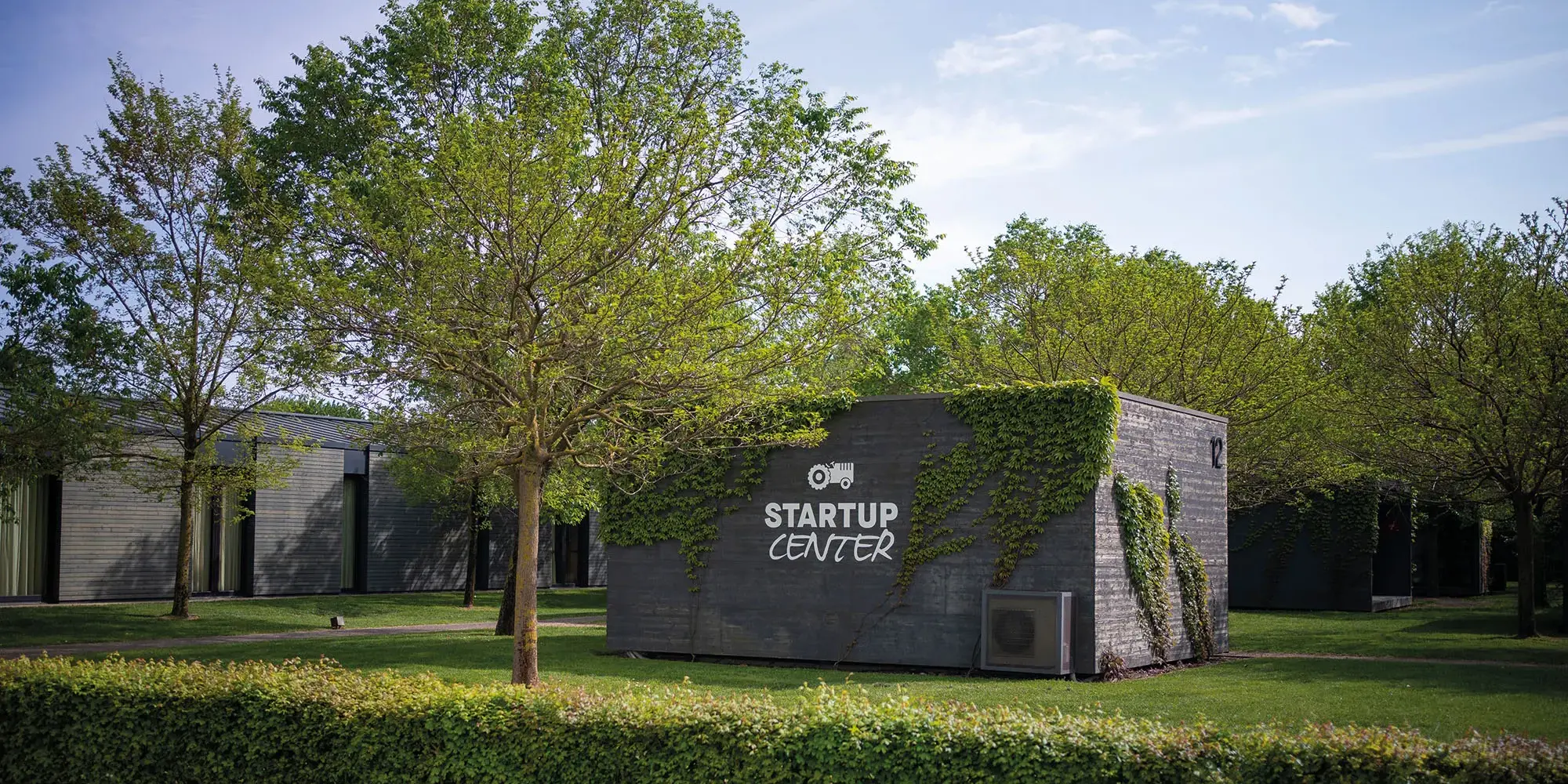
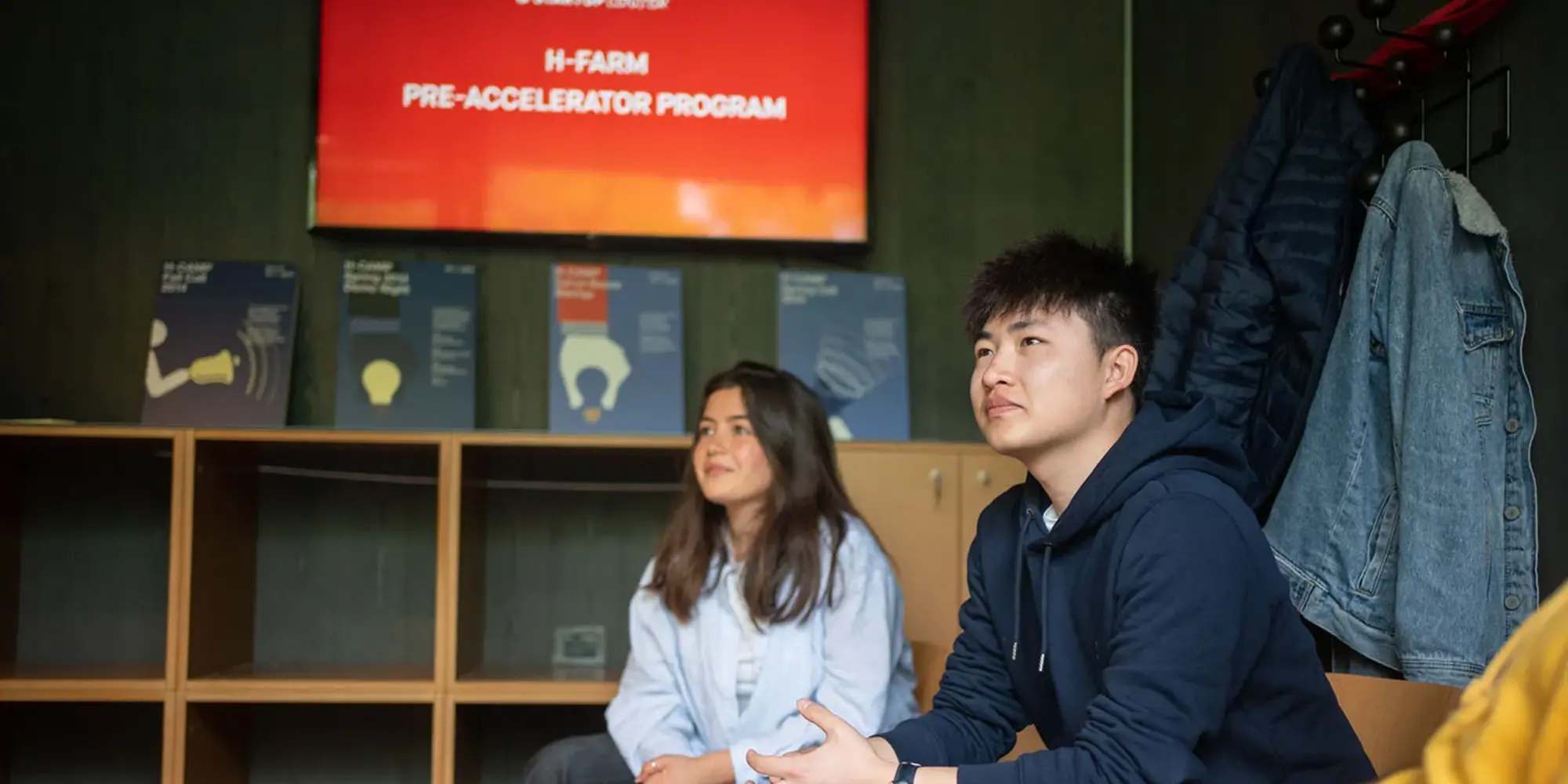
Guided by experts from H-FARM’s Entrepreneurship & Startup Center, students can develop their startup project, which will form the basis of a business project report and a final pitch.
–Dissertation
An academic thesis and individual research, accompanied by a one-week intensive course on research methods and writing techniques.
What differentiate us from other Design and Communication Master’s Degrees
Workshops
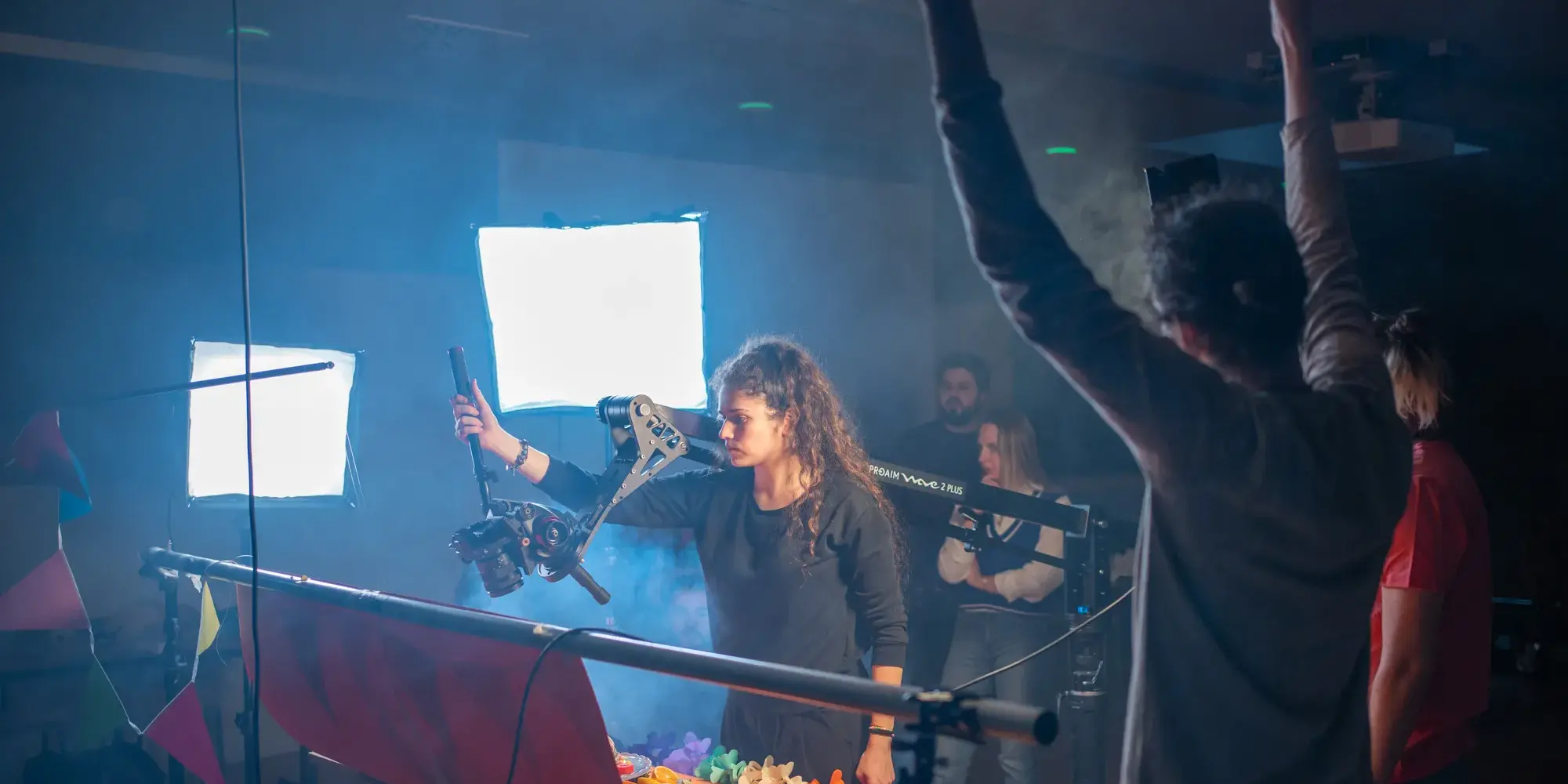
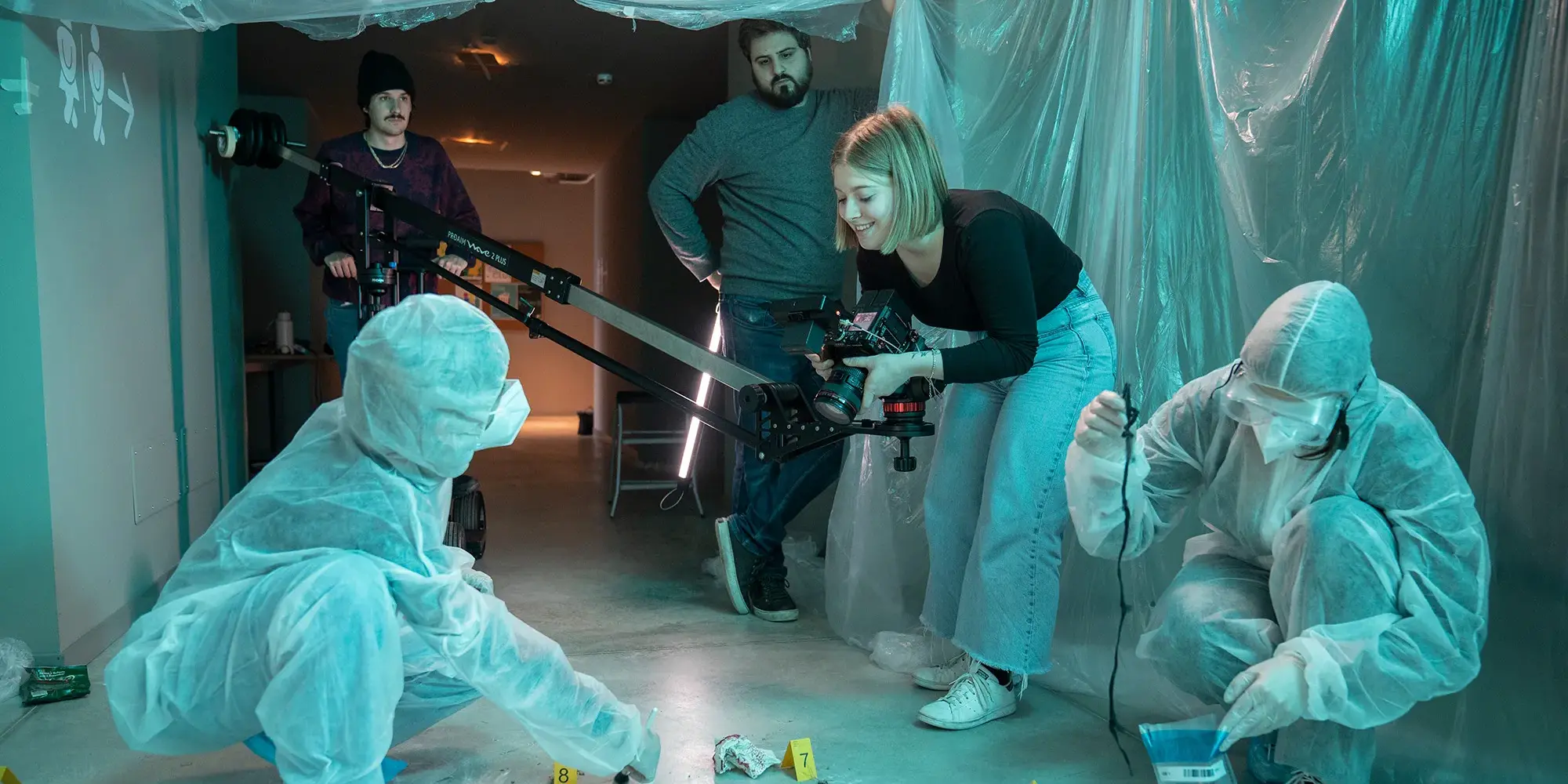
Hands-on workshops give students in the Master’s Degree in Design and Communication the opportunity to immediately apply their skills in a professional environment through a unique, practical experience.
Participants will have access to state-of-the-art equipment, working in a stimulating setting alongside industry professionals to put theories and concepts into practice.
Startup mindset
We believe that the same skills and abilities that are essential for starting a startup, such as leadership, problem-solving, resilience, strategy, risk-taking, and continuous learning, are valuable in any career path.
Through a combination of theoretical and practical learning, students gain insights, methodology, and tools that can help them succeed as entrepreneurs and in any other profession.
Our study programs are ideal for those seeking to develop a versatile and comprehensive skill set.
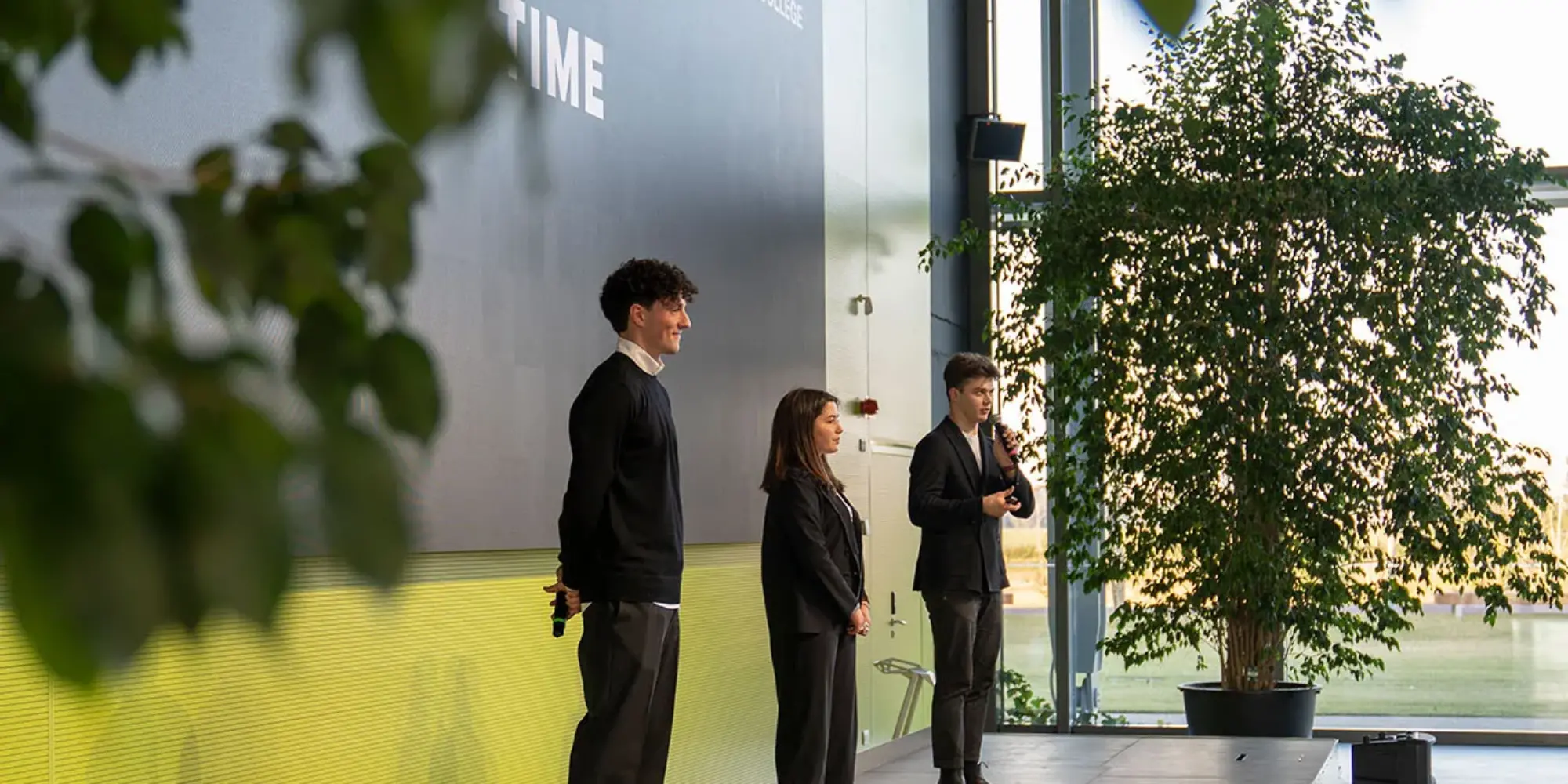
The H-FARM College Faculty
Our faculty brings together professionals with international experience across diverse fields: from academic research to business management, from startups to strategic consulting. It is a multidisciplinary ecosystem that allows students to engage with a variety of perspectives and with expertise that reflects the evolution of communication design and today’s creative professions. Our partners are leading companies in their respective industries, and our alumni are now innovators and recognized professionals within the organizations where they work.
To fully leverage this community, we designed an immersive and multidimensional learning experience. Students grow through direct interaction with faculty members, guest speakers and industry leaders, engaging in activities that range from group projects and case studies to challenges, hackathons, events, networking moments and inspirational talks. It is an environment that mirrors the practical and collaborative approach of a modern design course, while also reflecting the professional dynamics students will encounter in their future careers, whether they pursue art direction, UX design or visual creation.
To discover all the faculty members who make this learning experience unique, explore our full Faculty page and get inspired by the professionals who may guide your journey.
Admissions
You will find information about requirements, the selection process, and timelines in the Admission Notice.
Entry requirements
LANGUAGE REQUIREMENTS
Applicants must hold a recognized English language certification at the required level (see the admission call for the list of accepted certifications).
In some cases, it is possible to access the program without a certified English level. The accepted exemption cases are listed in the admission call.
Each certification serves a specific purpose — if unsure which one best suits your profile, please refer to our English Certification Guide.
ACADEMIC TITLE
Hold a Bachelor’s Degree in a relevant field, a first-level academic diploma issued by an Institute of Higher Education in Arts and Music, or be currently enrolled in a program leading to one of these qualifications, having completed at least 110 ECTS at the time of application.
Applicants must hold, or obtain within the deadlines specified in the admission call, an academic qualification suitable for admission to Master’s Degrees, in line with the entry requirements outlined on the University of Chichester’s website.
The academic qualification requirement depends on the country in which the degree was obtained.
Exceptionally, candidates who do not fall within the categories listed above may be considered eligible for admission to the Design and Communication program.
Deadline for submitting missing documents
Any documents not submitted during the application phase must be provided by the following deadlines:
Bachelor’s degree certificate: by December 31, 2027
English B2 certificate: by October 16, 2027
The admission process
- 1
- 2
- 3
- 4
STEP 1 – Online application
EU and Schengen Area countries:
You can apply through the form available on this page. During the process, you will be asked to provide the following information:
– Your personal details;
– Your Bachelor’s degree certificate with transcript of records, or, if you are still studying at the time of application, your enrollment certificate with transcript of records (for exceptional applications, please refer to the admission call);
– A motivational video in English (watch the video tutorial) or, alternatively, a portfolio showcasing your projects;
– Your CV in English;
– Your English language certificate (if already available).
Non-EU countries:
You can apply through the form available on this page. Non-EU students are required to pay an application fee of €50. If admitted, this amount will be deducted from the pre-enrollment or enrollment fee.
Within the same form, you will need to upload the following documents:
– Your personal details;
– Your Bachelor’s degree certificate with transcript of records, or, if you are still studying at the time of application, your enrollment certificate with transcript of records;
– Your personal statement and one letter of reference;
– Your CV in English;
– Your English language certificate (if already available).
STEP 2 – Interview
EU and Schengen Area countries:
After submitting the online application, you will be contacted by the Admissions Team to schedule your motivational interview, which will be held in English. Interviews will take place on the dates indicated in the admission call. During the interview, in addition to motivation, academic and extracurricular experiences, your English level will also be assessed.
Non-EU countries:
Applicants from non-EU countries who have correctly completed their application will be invited to an asynchronous admission interview.
STEP 3 – Application outcome
After the interview, you will receive the outcome of your application via email.
STEP 4 – Pre-enrollment or Enrollment
EU and Schengen Area countries:
Admitted candidates will have the opportunity to accept their place and proceed with pre-enrollment or enrollment, as applicable, by:
– completing the pre-enrollment/enrollment form received by email;
– paying the pre-enrollment/enrollment fee.
Non-EU countries:
Admitted candidates will have the opportunity to accept their place and proceed with pre-enrollment by:
– completing the pre-enrollment form received by email;
– paying the pre-enrollment fee.
Only after obtaining a visa will students be able to proceed with enrollment by completing the enrollment form received by email and paying the first installment.
Dual career: student-athlete
Skiing, tennis, golf, horse riding, sailing, motorsport: Champion’s Academic Journey is the programme for student-athletes who want to excel in both sport and academics, making the most of their athletic career without giving up the university experience.
The programme is open to national and international-level student-athletes, depending on the sport practised.
Global Talent Grant
Applicants from non-EU countries will have the opportunity to join the “Global Talent Grant” programme and apply for a tuition fee reduction through the application form.
Application timeline
Several application rounds are planned for the 2027/28 academic year.
EU or Schengen Area countries:
- Round
- Online application
- Interview
- Results
- Pre-enrolment
- Enrolment
- Early Decision Round
- 6 October – 30 November
- 9 and 10 December
- 14 December
- 23 December
- 1–31 July
- Round 1
- 1 December – 31 January
- 4 February
- 8 February
- 17 February
- 1–31 July
- Round 2
- 1 February – 31 March
- 5 April
- 7 April
- 21 April
- 1–31 July
- Round 3
- 1 April – 15 May
- 20 May
- 24 May
- 9 June
- 1–31 July
- Round 4
- 16 May – 30 June
- 5 July
- 7 July
- –
- 1–31 July
- Round 5
- 1 July – 31 July
- 4 August
- 6 August
- –
- 3–5 September
- Rolling
- 01 August – 5 October
- Rolling
- The day after the interview
- –
- Within 3 days of receiving the result and no later than 10 October
Non-EU countries:
- Round
- Online application
- Asynchronous video
- Results
- Pre-enrolment
- Enrolment*
- Early Decision Round
- 6 October – 30 November
- Within 7 days of receipt of the application
- Within 7 days of receipt of the asynchronous video
- Within 7 days of receiving the application outcome
- 1–31 July
- Round 1
- 1 December – 31 January
- Within 7 days of receipt of the application
- Within 7 days of receipt of the asynchronous video
- Within 7 days of receiving the application outcome
- 1–31 July
- Round 2
- 1 February – 31 March
- Within 7 days of receipt of the application
- Within 7 days of receipt of the asynchronous video
- Within 7 days of receiving the application outcome
- 1–31 July
- Round 3
- 1 April – 15 May
- Within 7 days of receipt of the application
- Within 7 days of receipt of the asynchronous video
- Within 7 days of receiving the application outcome
- 1–31 July
- Round 4
- 16 May – 30 June
- Within 7 days of receipt of the application
- Within 7 days of receipt of the asynchronous video
- Within 7 days of receiving the application outcome
- 1–31 July
The application deadline for students from non-EU countries is 30 June 2027.
Tuition & Financing
Fees and Payment Methods
Tuition for this Master’s Degree is as follows:
–EU or Schengen Area students: €15,500.00
€14,500.00 for those who apply during the Early Decision Round
–Non-EU students: €26,350.00
Payment is made in 3 installments.
Late payment of tuition fees after the due date stated in the contract will incur progressive penalties: €100 from the 1st to the 10th day after the due date; €200 from the 11th to the 20th day after the due date; and €200 plus suspension of the student’s university career from the 20th day after the due date onward.
1st installment
EU or Schengen Area students:
Full Fee: €5,700 (€800 at pre-enrollment + €4,900 at enrollment)
Early Decision Round: €5,500 (€800 at pre-enrollment + €4,700 at enrollment)
Non-EU students:
€10,550 (€2,500 at pre-enrollment + €8,050 at enrollment)
2nd installment
EU or Schengen Area students:
€4,900 by January 15, 2028
Early Decision Round: €4,500 by January 15, 2028
Non-EU students:
€7,900 by January 15, 2028
3rd installment
EU or Schengen Area students:
€4,900 by May 15, 2028
Early Decision Round: €4,500 by May 15, 2028
Non-EU students:
€7,900 by May 15, 2028
Funding
Discover funding and facilitations for academic programs at H-FARM College
Career
Careers after a master’s in communication design
What can you do after a master in design focused on communication? Graduates of the Master’s Degree in Design and Communication can take on creative and strategic roles among the most in-demand in digital communication. Typical profiles include:
- Digital Art Director
- Visual Designer
- UX/UI Designer
- Brand Designer
- Video Maker
- Graphic Designer
- 3D Artist
- Virtual Fashion Designer
- Web Designer
Many of these roles share cross-disciplinary skills: user-centered design, the ability to tell a brand story and command of digital tools. To better understand one of the most sought-after professions in the program, explore what a UX/UI Designer does, a figure who combines research, creativity and interface design.
Compensation varies widely by country, role and experience, with strong growth potential for those who move into art direction or senior visual design roles.
Want to figure out which career path best fits your goals? Talk to our Admissions Team.
Digital
Art Director
Art Director
Video
Maker
Maker
Web
Designer
Designer
Graphic
Designer
Designer
Web
Designer
Designer
Photographer
Visual
Designer
Designer

Job on Campus
At H-FARM College, students have the opportunity to engage in a true “learning on the job” experience that complements academic study with practical activities designed to enhance employability and develop an entrepreneurial mindset. It is an approach that values initiative and adaptability, essential qualities for anyone aspiring to work in communication design or in creative paths such as art direction, visual design or UX design.
Throughout the year, a variety of “Job on Campus” positions are available. Roles such as library supervisor, student tutor or operations assistant allow students to challenge themselves, acquire transversal skills and earn an income while continuing their university journey. These experiences offer a concrete chance for professional growth and expose students to dynamics they often encounter in design courses, from teamwork to operational management.
Alongside these opportunities, students can apply to join LUMINA, a consulting agency structured to replicate the workings of a real consultancy firm. Here, faculty members and professionals act as mentors, guiding students as they develop an entrepreneurial mindset through real projects and hands-on challenges.
These experiences make H-FARM College an environment where learning and professional practice come together every day, giving students a tangible advantage as they build their future careers.
If you want to explore all the opportunities offered on our campus, contact us: our team is here to help you choose the path that fits you best!

FAQ
What kind of professional profile does this Master’s program develop?


What is communication design?
Communication design is the discipline that combines graphic design, visual design and strategy to convey a brand’s messages and values through text, images, interfaces and multimedia content. It shapes the way an organization communicates with its audience across every digital and physical channel.
What is the difference between UX design and UI design?
UX design (User Experience) designs the overall experience and navigation logic of a digital product, while UI design (User Interface) handles the visual side such as colors, typography, icons and components. A complete UX design course, like the one integrated into the Master, trains professionals able to manage both areas.
What does an art director do?
An art director defines the creative and visual direction of a communication project, coordinating designers, photographers and video makers to ensure consistency between concept, images and message. It is one of the main outcomes of an art direction course or a visual design master.
Do I need a degree in design or communication to apply?
No, but a basic background in Architecture, Art, Design, Fashion, Graphics or Communication is required. During the admission process, the H-FARM College Admission Team will evaluate each candidate’s academic path and professional experience.
How long is the master and how much does it cost?
The Master lasts about one year and has a tuition fee of 15,500 euros for EU or Schengen area students and 26,350 euros for non-EU students, payable in three installments.
Is the master taught in Italian or English?
The Master is taught entirely in English, in person, to prepare participants for an international professional context.
What tools and software will I use during the program?
You will work with professional tools such as Adobe Creative Suite (Photoshop, Illustrator, InDesign), interactive design and prototyping software (Figma, XD), video editing and animation tools, as well as digital platforms for managing creative projects. The focus is on building skills that are immediately applicable in the professional world.
Is the Master’s more creative or strategic?
Both. The strength of the program lies in the integration of creativity and strategy. You will work on visual concepts, storytelling and digital campaigns, while also focusing on branding, positioning and brand identity design.
Will I work with real companies and projects?
Yes. The Master’s includes projects based on real briefs, workshops with industry professionals and collaborations with companies, agencies and partner brands. This allows you to build a solid portfolio, expand your network and tackle challenges that reflect the real professional world.
 Back
Download the Brochure
Back
Apply
Back
Contact us


