FinTech and Open Banking: the New Frontier of Digital Finance

Think about the last time you paid with your phone, moved money between two different apps, or received an instant refund. You were touching FinTech without even knowing it. That transaction that took less than a second? That is Financial Technology at work, and it is rewriting the rules of an entire industry.
If you are thinking about building a career in digital finance, you are stepping into one of the most dynamic and opportunity-rich sectors of our time.
What Is FinTech and Why It Is Revolutionising Finance
FinTech stands for Financial Technology. In practice it is the collection of technologies and business models transforming how we manage, transfer and invest money. Banking, insurance, payments, investment management: no corner of the financial industry has stayed the same as it was ten years ago.
FinTech filled the gaps left by traditional finance. Want to open a bank account? You can do it from your phone in five minutes. Want to invest? Platforms now let you start with just a few euros. Want a loan? Some systems analyse your profile in real time, without queues or paperwork.
If you want to understand how data analysis drives these financial decisions, read our article on data driven marketing: the way data transforms every sector, finance included.
From Digital Payments to Alternative Credit: FinTech Sectors
FinTech is not one single thing. It is an ecosystem with very different areas:
InsurTech: fully digital insurance, on-demand policies and real-time quotes.
WealthTech: automated investment platforms and robo-advisors that manage portfolios for you.
LendTech: alternative credit for individuals and SMEs, scored using non-conventional data.
RegTech: tools to navigate regulatory compliance more efficiently.
Each of these areas needs trained people. Knowing this variety of career paths exists can make a real difference in your educational choices.
FinTech and Blockchain: Worth Understanding
Blockchain and FinTech have come together almost naturally, creating an ecosystem that continues to evolve rapidly. The ability to record transactions in a secure, transparent, and immutable way, without the need for an intermediary, has opened up scenarios that would have seemed like science fiction just ten years ago. This has made financial processes faster, more accessible, and often more cost-efficient.
From this integration come innovations such as stablecoins, smart contracts, and DeFi platforms, which are reshaping how we think about payments, lending, and investments. It’s not just about technology, but a real shift in the global financial paradigm.
Want to understand how this works in practice? Read our in-depth article on stablecoins and the future of digital finance, one of the key topics for anyone who wants to work in this sector.
Open Banking: What It Is and Why It Changes Everything
Have you ever used an app that shows all your bank accounts in one place, even if they are with different banks? That is Open Banking.
Open Banking does not just mean “digital banking.” It is a regulated system where banks share users’ financial data, with their explicit consent, with third-party apps and services through APIs. In Europe the PSD2 directive made all of this not only possible but mandatory for banks.
How APIs Work in Open Banking
APIs are the technical mechanism that lets different systems talk to each other. In the context of Open Banking, banking APIs allow an external app to access your account data in a secure and controlled way to offer you services that no single bank could provide alone.
Those who understand and can build these mechanisms are among the most sought-after profiles in the sector. If you are interested in the technical infrastructure behind these services we also recommend reading our article on what cloud computing is: the technology that makes FinTech scalability possible.
Real-World Services Born Thanks to Open Banking
Apps like Revolut, Plum and Yolt exist because Open Banking made it possible to aggregate data from multiple banks. But Open Banking is not just for consumers. Companies use it too: B2B platforms for corporate liquidity management, automated payment systems between suppliers and customers, real-time credit analysis tools.
Want to find out which programme is right for you? Get in touch with the H-FARM College team.
Who Is Leading the Revolution: FinTech Companies to Know
The names that come up most are the international giants: Stripe for online payments, Klarna for buy-now-pay-later, Robinhood for democratised investing. But the sector is much bigger than a handful of unicorns.
In Italy companies like Oval Money, Satispay and Tinaba have found their market in previously underserved segments. And traditional banks have not been standing still: UniCredit, Intesa Sanpaolo and BNP Paribas all have dedicated digital innovation divisions.
Working in FinTech: What It Actually Takes
FinTech is one of the sectors where qualified professionals are structurally in short supply. The most in-demand profiles include product managers with experience in lending or payments, data scientists specialised in credit risk, compliance specialists familiar with PSD2 and software engineers experienced in APIs. English is practically essential: FinTech is global.
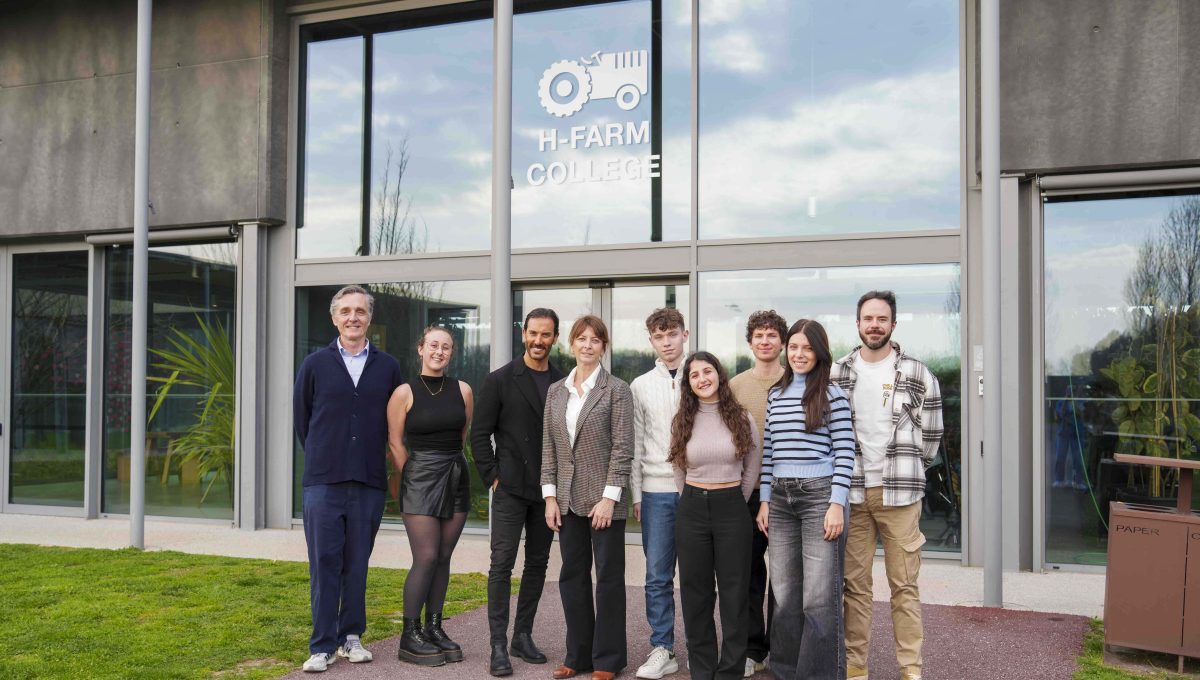
How to Prepare with H-FARM College
The Digital Economics and Finance Bachelor’s Degree at H-FARM College is built to develop profiles capable of navigating the intersection of finance and technology. Blockchain, data analytics, behavioural finance and FinTech applications are integral parts of the programme, not optional extras.
You study in an ecosystem where startups, companies and industry professionals are part of your everyday environment. That is the difference between learning theory and understanding how the market actually works.
Want to find out which programme is right for you? Get in touch with the H-FARM College team.




FAQ


FinTech, short for Financial Technology, combines finance and technology to create faster, more accessible and smarter financial services. It is growing because it addresses real needs: instant payments, digital investing, alternative credit and real-time financial data management.
Open Banking is a system that allows banks to share users’ financial data, with their consent, with third-party apps and services via APIs. In practice, it lets you manage all your accounts in one app and access personalized financial products.
Not necessarily. It transforms existing roles and creates new ones. Professionals with hybrid skills combining finance, data and technology are highly sought after both in banks and in FinTech startups.
You need knowledge of economics and finance, combined with digital skills such as data analysis, cybersecurity, APIs and blockchain. The ability to interpret data and think strategically is essential.
Through programs that integrate digital economics, data analytics and technological innovation, H-FARM College trains professionals who can operate at the intersection of finance and tech, with a strong practical and market-oriented focus.








 Back
Back

