The Future of Work: Which Jobs Will Shape the Age of Artificial Intelligence

Will artificial intelligence replace your job? It’s the question millions of people are asking, caught between alarming headlines and conflicting predictions. But perhaps the right question is different: which skills will make you irreplaceable in a world where machines learn faster every day?
The truth is that the future of work isn’t a distant threat. It’s already here, taking shape as you read these lines, and those who know how to interpret this change will have opportunities that previous generations couldn’t even imagine.
The future of work is already here: what is really happening
Change is no longer on the horizon: it’s underway. Artificial intelligence is redefining entire sectors, from healthcare to finance, from marketing to logistics. But contrary to what’s often reported, this isn’t a sudden revolution that will eliminate millions of jobs overnight.
The transformation is more nuanced and, in some ways, more interesting. Some roles are indeed disappearing, others are evolving, and many new ones are emerging. Future jobs require a combination of technical and human skills that wasn’t necessary before.
What we’re observing is a phenomenon of augmentation rather than substitution: AI doesn’t replace the professional but amplifies their capabilities. A doctor with AI diagnostic tools can analyze more cases with greater precision. A marketer with predictive algorithms can personalize campaigns at a scale impossible to achieve manually.
The question isn’t whether artificial intelligence will change work, but how quickly we’ll adapt.
Why everyone is talking about artificial intelligence and future jobs
The debate on AI jobs and the future of work dominates conversations for a simple reason: for the first time in history, machines are learning to perform tasks we considered exclusively human. Not just manual and repetitive work, but creative, analytical, even relational activities.
ChatGPT writing texts, Midjourney creating images, algorithms composing music: these are signs of a profound change affecting professions that were thought to be safe. Journalists, designers, programmers, lawyers, no sector is completely immune.
But there’s another side to the coin. What jobs are AI taking over is only half the story. The other half concerns the enormous opportunities for those who learn to use these tools instead of competing against them.
Companies are desperately seeking professionals who understand how to integrate AI into existing processes, how to manage hybrid human-machine teams, how to translate technological potential into business value. These are rare skills, and those who possess them have an enormous competitive advantage.
Will AI replace humans?
It’s the million-dollar question, and the honest answer is: it depends. AI will replace humans in some specific tasks, that’s certain. Already today, algorithms perform jobs that ten years ago required teams of people.
But total replacement is a much less likely scenario than sensationalist headlines would have you believe. Here’s why:
AI excels at specific, repetitive, pattern-based tasks. Analyzing thousands of legal documents, identifying anomalies in financial data, optimizing logistics routes. In these activities, machines are already superior to humans.
Where AI struggles is in tasks requiring contextual judgment, genuine creativity, empathy, and adaptation to unforeseen situations. An algorithm can write an article, but it struggles to understand the cultural nuances of a specific audience. It can analyze medical data, but it can’t hold a frightened patient’s hand.
The most likely future isn’t human versus machine, but human with machine. Professionals who know how to collaborate with AI, delegating repetitive tasks and focusing on high-value ones, will thrive.
To better understand how AI is transforming specific roles, it’s useful to explore figures like the Machine Learning Specialist, increasingly in demand by companies.
New AI jobs and emerging career paths
While some traditional roles contract, an entire ecosystem of AI jobs is emerging. It’s not just programmers and data scientists, but a variety of profiles combining technical skills with sector expertise.
The Prompt Engineer is a brand-new figure: professionals specialized in communicating effectively with generative AI models to achieve optimal results. The AI Ethics Officer ensures that artificial intelligence implementation respects ethical and regulatory principles. The Machine Learning Operations (MLOps) Engineer manages the lifecycle of AI models in production.
But new jobs aren’t only technical. There’s a need for AI Trainers who teach models to understand specific contexts, AI-Human Interaction Designers who create intuitive interfaces between people and intelligent systems, AI Business Translators who bridge technical teams and business decision-makers.
And then there are existing roles that are transforming. The marketing manager becomes an AI-Powered Marketing Manager, the financial analyst becomes an Augmented Financial Analyst. The basic skills remain, but they’re enriched with a new dimension.
How existing jobs are changing thanks to AI
The transformation doesn’t only concern new roles but also established ones. Practically every profession is undergoing a silent metamorphosis that redefines its skills and responsibilities.
In the legal sector, AI is automating jurisprudential research and contract analysis. Lawyers aren’t disappearing, but their work is shifting toward higher-value activities: strategy, negotiation, client relationships. Those who know how to use legal tech tools are more productive and competitive.
In marketing, predictive and generative algorithms are revolutionizing content creation and campaign personalization. The marketer of the future isn’t someone who can write perfect copy, but someone who can orchestrate AI tools to produce effective communication at scale.
In finance, automated data analysis is changing the analyst’s role. Required skills are shifting from manual number processing to strategic interpretation and communication of results.
In design, tools like Midjourney and DALL-E are democratizing visual creation. The smartest designers are using them to accelerate the creative process, not to replace it. Those who understand how to leverage cloud computing and digital infrastructure have a significant competitive advantage.
The skills that will make the difference in future jobs
If AI can learn almost anything, what remains exclusively human? The answer defines the key skills for future jobs.
Critical thinking becomes fundamental. In a world of automatically generated information, being able to distinguish true from false, relevant from irrelevant, is a rare and precious skill.
Authentic creativity (not generating variations on existing themes, but the ability to imagine something genuinely new) remains human territory. AI can remix, but it struggles to innovate.
Emotional intelligence gains increasing value. Managing relationships, motivating teams, understanding the nuances of human communication: these are skills that machines don’t master.
Continuous learning ability is perhaps the most important. In a rapidly changing world, those who can learn and adapt win over those with static skills, however advanced.
And then there’s technological literacy: you don’t need to become a programmer, but understanding how AI tools work, what they can and cannot do, how to integrate them into your work. It’s the difference between suffering change and leading it.
The Business Analyst, for example, is a figure that embodies this combination of analytical and strategic skills increasingly in demand.
How to prepare today to stay relevant tomorrow with H-FARM College
Preparing for the future of work can’t wait. Every month that passes, the gap between those who are adapting and those who stand still widens. But how do you build skills for a world that doesn’t yet fully exist?
The answer lies in an educational approach that combines theory and practice, technology and humanism, specific skills and adaptive mindset. This is exactly the approach that H-FARM College has developed in its university programs.
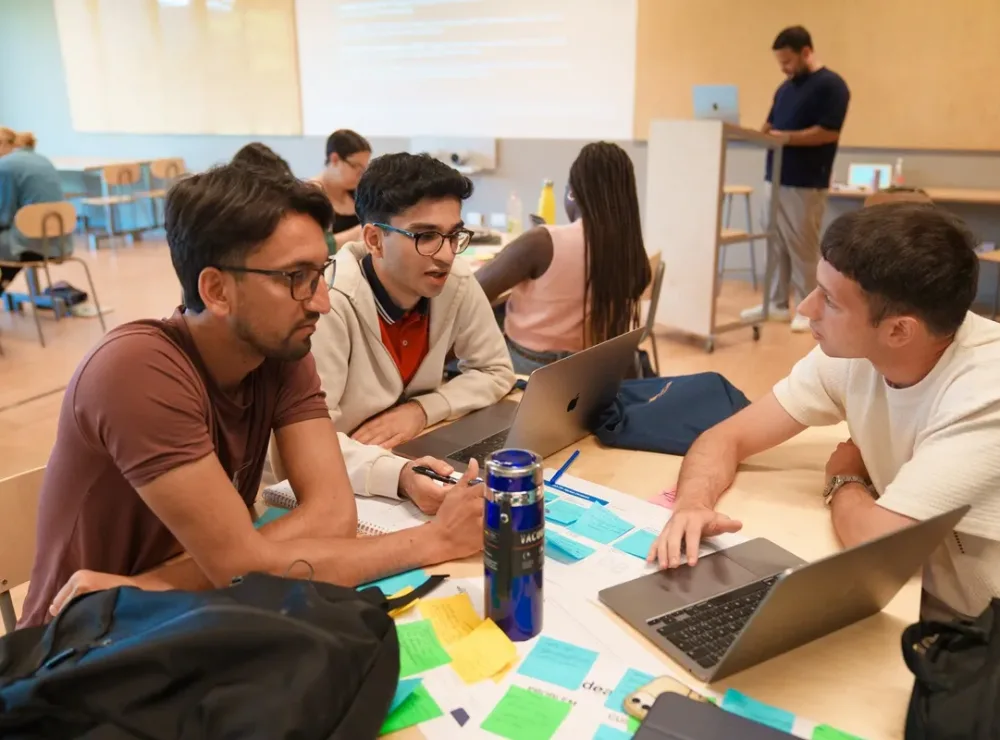
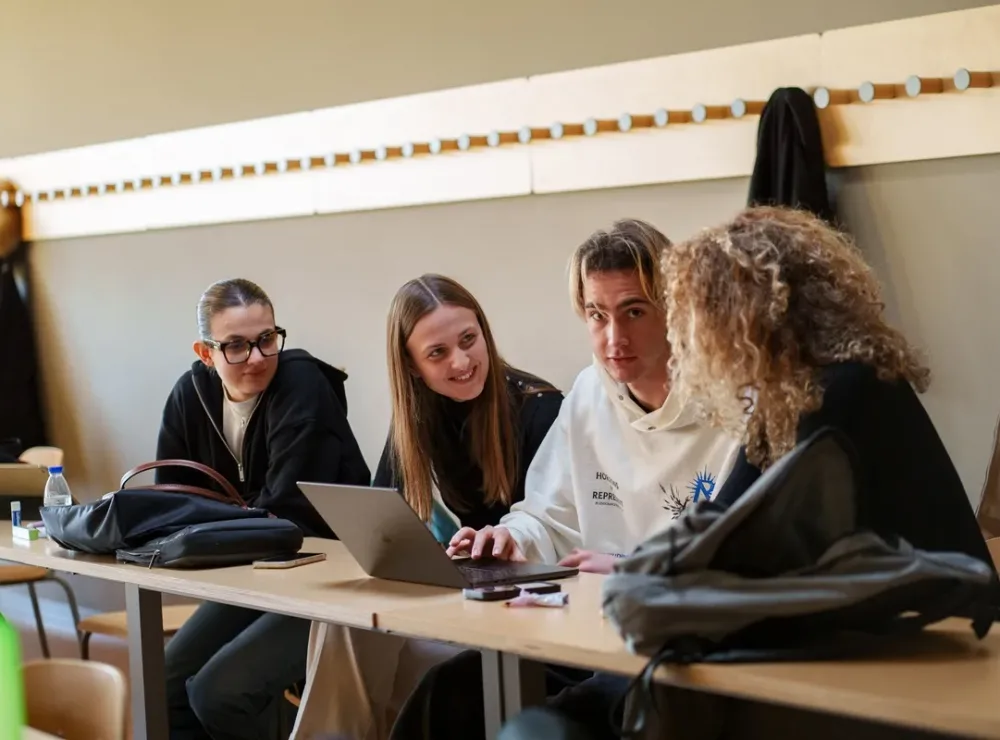
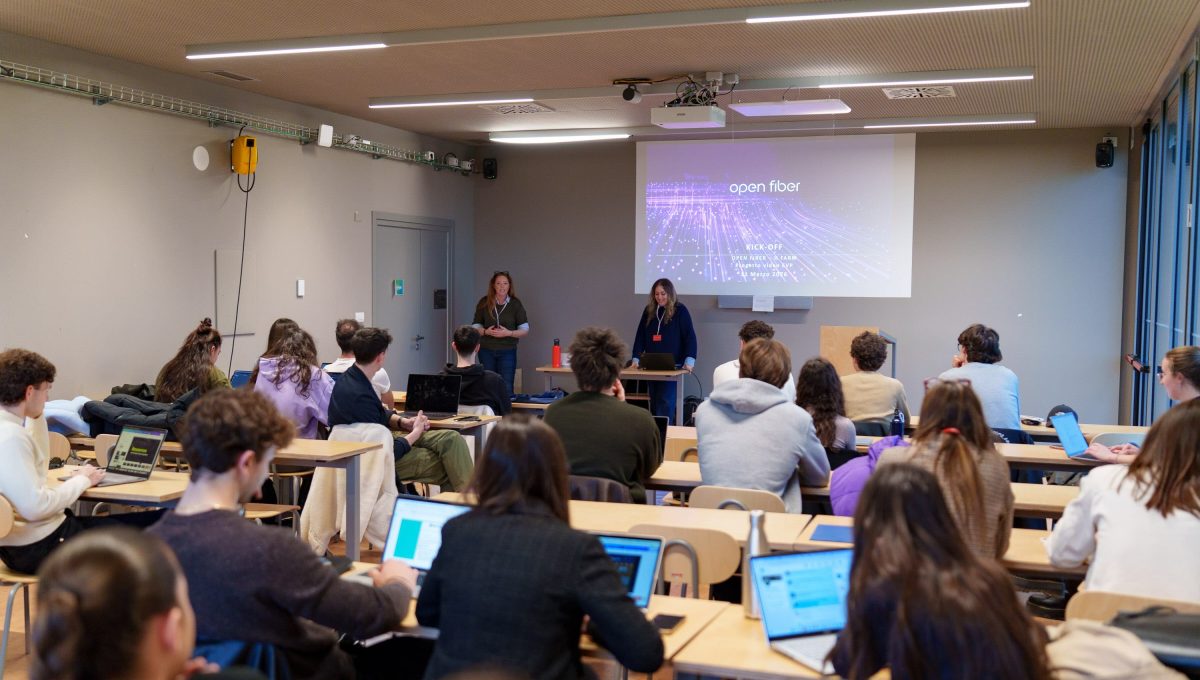
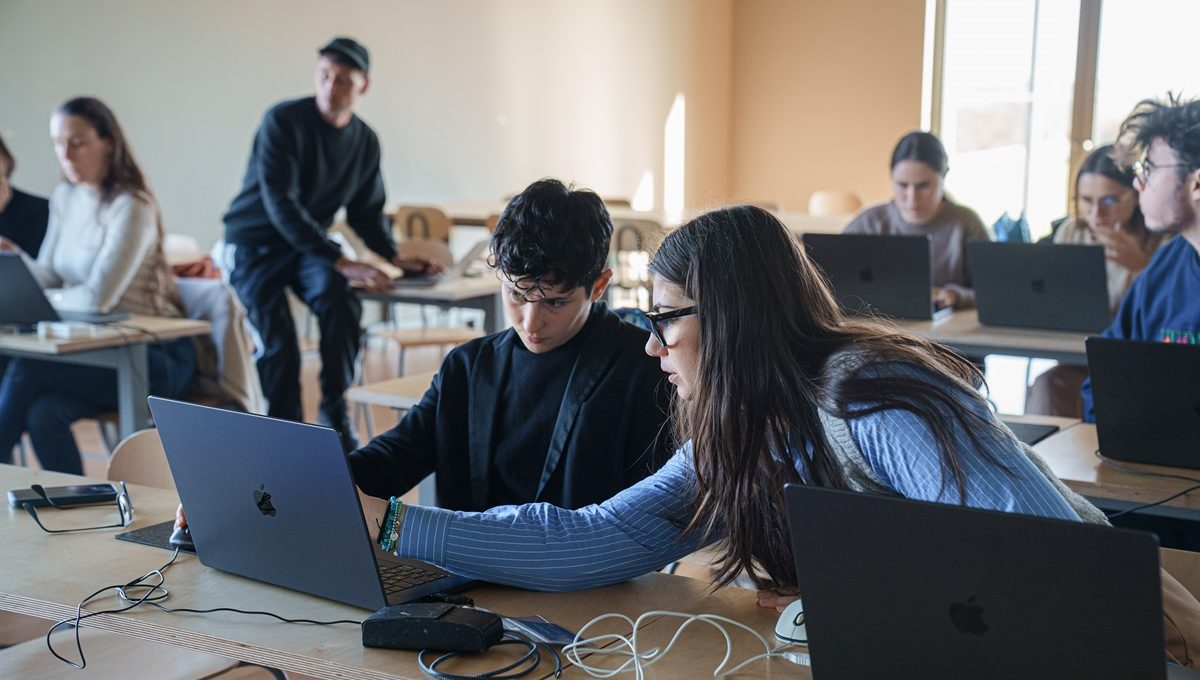
On a campus where innovation and experimentation are the norm, students don’t just study artificial intelligence: they use it, test it, explore its limits and potential. They work on real projects with companies facing digital transformation. They develop that combination of technical and soft skills that the market is seeking.
The Master’s Degree in AI for Business Transformation is designed specifically for those who want to be protagonists of this change. It doesn’t just train technicians, but professionals capable of understanding AI and translating it into value for organizations. Discover the Master’s degree in AI for Business Transformation and prepare for the future of work with H-FARM College!
Because the future of work has already begun and the question isn’t whether it will change your career, but whether you’ll lead that change or be led by it. The choice, today, is still in your hands.


FAQ


Change will not happen all at once. Some professions are already evolving, while others will change gradually over the next few years. This means there is time to adapt, experiment, and develop new skills without having to rush at the last minute.
No. Startups, large companies, and small and medium-sized businesses adopt AI differently, depending on their goals, resources, and internal culture. This creates very different career opportunities and makes it important to understand the context you want to work in.
AI is not only for programmers or engineers. Many future jobs require hybrid skills, where technology, business, and creativity come together. Understanding how to use AI is becoming useful even for those working in marketing, design, or strategy.
Thinking that there is only one “right” job or a single correct path. The future of work will be made up of different, often non-linear careers, where adaptability matters more than a specific role.
Because studying is the best time to experiment without taking big risks. Working on projects, testing digital tools, and developing a change-oriented mindset helps students enter the job market with greater awareness and flexibility.





 Back
Back

