How to start an innovative startup: a practical guide for young founders

Got an idea that feels brilliant? Are you the kind of person who constantly wonders how to make things better, what’s missing out there? You probably have the DNA of an entrepreneur. And maybe it’s time to turn that spark into an innovative startup.
In this article you’ll learn what a startup is, how it works, what it takes to set one up, and the first concrete steps to launch one — even from scratch.
And if by the end you realise this is your path, contact us: with H-FARM College programmes you can turn passion into a real project.
What an innovative startup is and why more young people want to launch one
What is a startup? It’s not just a modern word that looks good in a LinkedIn bio. It’s a young, flexible, innovation-driven business. And above all, it’s a way of thinking about change.
An innovative startup develops high-tech products or services and grows fast, exploring new paths. Unlike traditional businesses: it experiments, fails and tries again. The goal: to revolutionise a sector.
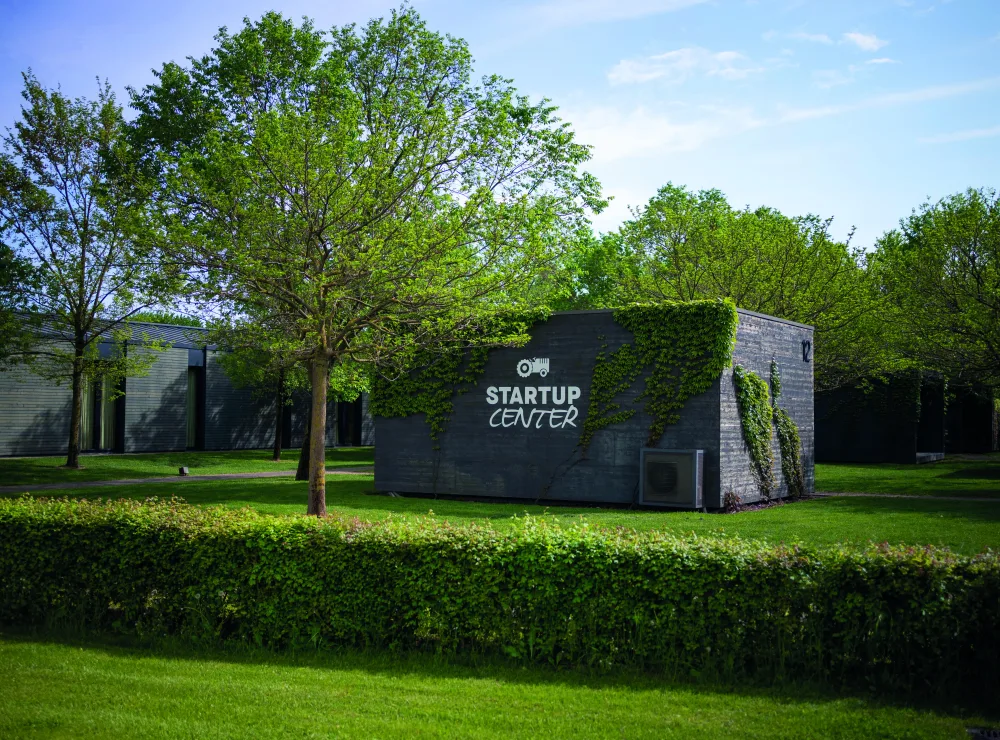
The term was born in Silicon Valley, but today startup ecosystems are global, spanning Europe, Asia, the Americas and beyond. Hubs like the H-FARM Entrepreneurship & Startup Center have built fertile ground for technological and entrepreneurial innovation, connecting founders to international networks.
Why do more young people want to found one? They want freedom, impact, the feeling of being part of change. And today the tools are out there: from cloud computing that brings down infrastructure costs, to funds and dedicated incubators.
How an innovative startup works
An innovative startup isn’t a small business: it’s an organisation designed to grow fast and scale. To be considered innovative, a startup typically needs to meet specific criteria around age, focus on R&D, and the nature of its product or technology.
Typical criteria for an innovative startup
- A young company, usually less than 5 years old
- Not publicly listed on a stock exchange
- Reinvests earnings into growth rather than distributing profits in the early stage
- Strong focus on at least one of: R&D investment, qualified team (PhDs, master’s graduates), proprietary technology, registered patents or software
Many countries have their own legal framework for officially registering an “innovative startup” — dedicated tax incentives, simplified incorporation procedures or access to public funding. The exact rules vary depending on where you decide to incorporate, so it’s worth checking the specific requirements in your country of choice.
From an operational standpoint, everything moves fast. Startups adopt the lean startup method developed by Eric Ries: build a minimum product (MVP), measure results with real data, learn and iterate. Standard tools: Business Model Canvas, OKR framework, Agile and Scrum methodologies.
How to start a business from scratch: the first steps to turn an idea into a company
It all starts with an idea. But it doesn’t have to be perfect — it must solve a real problem. The first step is always idea validation: talk to potential users, listen to the market, check if there’s real demand before building.
The main phases of launching a startup
- Validation: user interviews, market analysis, defining the problem to solve
- Business Model Canvas: who your customers are, how you reach them, the value you offer, how you monetise
- MVP (Minimum Viable Product): basic product version to gather real market feedback
- Go-to-market: marketing and distribution strategy to acquire the first customers
- Funding: bootstrap, angel investors, accelerators, grants or venture capital depending on the stage
More and more startups are built on enabling technologies. Cloud computing lets you scale without investing in servers. Digital finance and stablecoins open up new business models for fintech.
What it takes to set up an innovative startup: what to know before you start
Beyond formal criteria, founding an innovative startup takes human requirements too: determination, ability to learn fast and manage uncertainty. And above all, a team.
Nobody builds a startup alone. You need complementary people who share the vision but bring different perspectives: the technical one, the commercial one, the creative one.
A learning environment like H-FARM doesn’t just prepare you technically: it connects you with co-founders, mentors and investors. You start moving in a real ecosystem, not a simulated one. Write to H-FARM College and tell us about your idea.
How H-FARM College trains tomorrow’s founders
Choosing the right educational path can make the difference between an idea that stays on paper and an innovative startup that takes shape, grows and wins the market.
H-FARM College’s Bachelor’s Degree in Business Creation & Entrepreneurship is designed for young digital entrepreneurs: you don’t just study theory, you live entrepreneurship day by day. Real MVPs, hackathons, meetings with investors and mentors.
For those more advanced — with an idea or initial traction — the Master in Entrepreneurship, Startups & Innovation is the programme for moving from theory to actually building an international-grade business.
In summer, Startup Summer (AD)Venture is the intensive programme to experience building a startup in a stimulating, international environment.
Studying to launch a startup with H-FARM College
H-FARM College isn’t a university like the others: it’s an ecosystem that accelerates your entrepreneurial talent. The campus brings together students, startups in residence, partner companies and mentors — an environment where every conversation can become an opportunity.
With the Bachelor’s Degree in Business Creation & Entrepreneurship you’ll work on real projects, develop MVPs and take part in challenges with real companies. It’s not a course about entrepreneurship: it’s a path of entrepreneurship.
The Entrepreneurship & Startup Center at H-FARM hosts startups in residence, organises events with investors and offers co-working spaces. It’s the perfect place to understand if and how you can turn your idea into something real.
Life on Campus: where ideas become companies
Studying at H-FARM College means living an international campus where Student Life is full of clubs, events, hackathons and networking with students and professionals from all over the world.
The H-FARM campus is a unique ecosystem of its kind: startups, corporate partners, investors and students sharing the same space. Every day is a chance to meet your future co-founder or mentor.
Want to see it for yourself? Join the next Open Day or book a visit: it’s the best way to see if H-FARM College is right for you.
Got questions? Contact us: we’ll help you find the programme that best fits your entrepreneurial goals.


FAQ


A startup is a young, scalable, innovation-driven business designed to grow fast through new technology or business models. Unlike a traditional company, it experiments rapidly, adapts to the market and aims to revolutionise a specific sector.
An innovative startup is usually a young company (less than 5 years old), not publicly listed, that reinvests profits into growth and meets at least one of the following: significant R&D investment, qualified staff (PhDs or master’s graduates), proprietary technology, patents or registered software. Specific legal definitions and benefits vary by country, so check the framework in the jurisdiction where you plan to incorporate.
The lean startup is Eric Ries’ methodology based on the Build–Measure–Learn cycle: you build a minimum product (MVP), measure results with real data, learn and pivot when needed. It reduces the risk of investing resources in something the market doesn’t want. It’s the standard method in startups worldwide.
Founders typically combine multiple sources: bootstrap (self-funding), business angels, venture capital, crowdfunding, accelerator programmes and public grants. Many countries also offer dedicated funding schemes and tax incentives for innovative startups — worth exploring early to plan your funding strategy.
H-FARM College’s Bachelor’s Degree in Business Creation & Entrepreneurship is the ideal route for anyone who wants to learn digital entrepreneurship hands-on. For those already more advanced, the Master in Entrepreneurship, Startups & Innovation offers an advanced programme with international exposure and connections with real investors.








 Back
Back

