Design Thinking: What It Is and How to Use It for Real Innovation

Imagine joining a team that has been asked to reinvent the shopping experience inside a physical store. On the table you find a vague brief, some sales data and a budget. Where do you begin? You could throw out ideas at random, hold one brainstorming session after another, or start from the solutions management already has in mind. But there’s a smarter way: start from people.
This apparently simple shift in perspective is the heart of Design Thinking. A method born not in marketing or engineering, but used today by the world’s largest companies, from agile startups to tech giants, to tackle complex problems by putting humans at the center.
In this article you’ll discover what Design Thinking really is, how it works, what its stages are and why it has become one of the most sought-after skills in today’s job market. We’ll also tell you how at H-FARM College, on our 50-hectare campus in Roncade, this methodology isn’t a slide-deck topic but part of everyday life, thanks to real challenges with brands like The Lux Collective, Campari Group, Microsoft and Red Bull.
What Is Design Thinking and Why It Matters Today
Design Thinking is a problem-solving approach that starts from people, questions assumptions, encourages experimentation and favors original solutions to ill-defined problems. It’s not an academic theory: it’s a method born in the design world and later adopted across business, tech, healthcare, public administration and many other sectors.
Its strength lies in three principles: empathy (truly understanding who will use the solution), iteration (try, fail, try again), and collaboration (working in multidisciplinary teams). In a world where problems are increasingly ambiguous and certainties fewer and fewer, a method like this offers a clear path forward. As our Professor of Practice Serena Leonardi explains in an in-depth article on the power of Design Thinking, it’s a user-centered and holistic approach to innovation that enables people to excel in human-centric roles — the ones that will remain strategic even in a scenario where 300 million jobs could be replaced by AI by 2030.
From Creative Problem Solving to a Structured Innovation Method
Design Thinking has roots in the creative problem solving of the 1960s, but it was codified as a method in the 1980s at Stanford’s d.school and the design firm IDEO. The revolutionary idea was this: if design works so well for products, why not apply it to services, organizations, public policies? From there the method has been refined, systematized and taught around the world.
Today Design Thinking is part of the DNA of companies like Apple, Google, IBM and Airbnb, as well as smaller organizations using it to develop new products, improve customer experience or rethink internal processes.
The 5 Stages of the Design Thinking Process
The Design Thinking process unfolds across five stages: Empathize, Define, Ideate, Prototype and Test. It’s not a linear path: it’s more like a journey, where each stop might reveal something that sends you back one or two steps. And that’s fine: iteration is part of the method, not a flaw.
Empathize: Understanding Real User Needs
The first stage is the most underestimated and the most important. Empathizing means leaving your office, talking with the people who will use the solution, observing them in their real context, listening to their frustrations without pretending you’ve already understood everything. It’s not running a survey: it’s immersing yourself in someone’s life.
The tools of empathy are in-depth interviews, ethnographic observation, persona building, user experience maps. The goal isn’t collecting data: it’s building understanding.
Define, Ideate, Prototype and Test: From Insight to Validation
In the Define stage, insights from empathy are transformed into a clear problem to solve. This is when the famous “How might we” statement gets written: the guiding question from which the search for solutions begins. In the Ideate stage, many ideas are generated, even wild ones, without judging them too early. In the Prototype stage, the most promising ideas become tangible objects (a mockup, a video, a storyboard, a cardboard fake product).
In the Test stage, prototypes are put in front of real people and you observe what happens. What you learn almost always sends you back to revise something: maybe the problem was different, maybe the solution needs rethinking. You start again. You improve. You try again.
Design Thinking Examples: Real Cases of Innovation
Design Thinking doesn’t live in books: it lives in the products you use every day. Airbnb, for example, used Design Thinking in its early years when it realized listings had terrible photos: the founders grabbed a camera and went house to house taking better pictures. Revenue exploded. PillPack rethought the experience of buying medication by centering elderly people and their struggles with multiple pill bottles. GE Healthcare redesigned MRI machines to make scans less frightening for children.
In each of these cases the starting point wasn’t a brilliant idea or a technology, but a problem observed firsthand, lived alongside the people experiencing it.
How Startups Use Design Thinking to Validate Ideas
Startups have made Design Thinking an almost natural ally. When you have few resources and need to figure out fast whether an idea works, throwing an imperfect prototype at the market is far more useful than spending a year perfecting it in the dark. The MVP (Minimum Viable Product) concept is a child of Design Thinking, as is the “fail fast, learn faster” culture. To dive deeper into this topic, read our article on what MVP means and how to test an idea before launching a startup.
The H-FARM College team is ready to help you figure out whether this is the right path for you: reach out for a personalized consultation and let’s shape your entry into the digital world together.
Design Thinking vs Design Sprint: Differences and When to Use Each
A common question is what the difference is between Design Thinking and a Design Sprint. Design Thinking is a broad, flexible framework that can last weeks or months. A Design Sprint is an evolution of it, designed by Jake Knapp at Google Ventures: five intense, highly structured days to go from an initial question to a prototype tested with real users. Both are useful, but at different moments: Design Thinking when you want to explore a broad problem; Design Sprint when you need to make fast decisions about a specific solution.
Human Centered Design: Putting People at the Heart of Innovation
Human Centered Design is closely related to Design Thinking: it’s the design approach that always starts from people, their needs, their behaviors. The difference is subtle: while Design Thinking is a method, Human Centered Design is almost a philosophy. It’s the idea that every product, service or system should be built around whoever will use it, not around whoever produces it.
In an era where automation, AI and big data threaten to erase the human factor, this philosophy is more urgent than ever. The companies that win today are those that still know how to listen to people, interpret them, design for them.
Why Creative Problem Solving Is a Key Skill for the Future of Work
The World Economic Forum’s Future of Jobs Report has named creative thinking, analytical capacity and problem solving among the most in-demand skills for the next decade. That’s no accident: these are the skills that machines still struggle to imitate. Those who can think outside the box, find unexpected connections, invent new solutions are and will remain irreplaceable.
Design Thinking and AI: New Creative and Strategic Opportunities
Generative AI is transforming Design Thinking too. Ideation stages can be supercharged with prompts that generate hundreds of variations in minutes; prototypes can be created much faster with text-to-image and text-to-prototype tools; user interview analysis can be accelerated by models that extract patterns from text.
But the designer’s role doesn’t disappear: it changes. Today’s designers must know how to converse with AI, choose what to keep and what to discard, apply the judgment the machine lacks. In our article on the impact of AI in the world of work we explore how human and artificial skills are being redesigned together.
How H-FARM College Teaches Design Thinking Through Real Projects
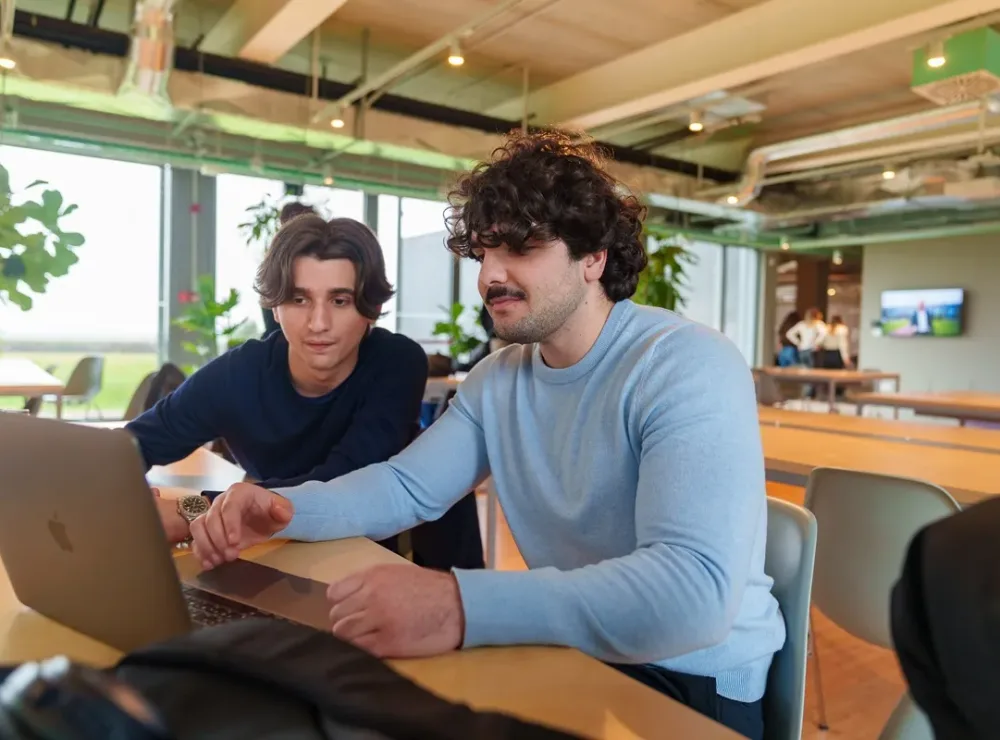
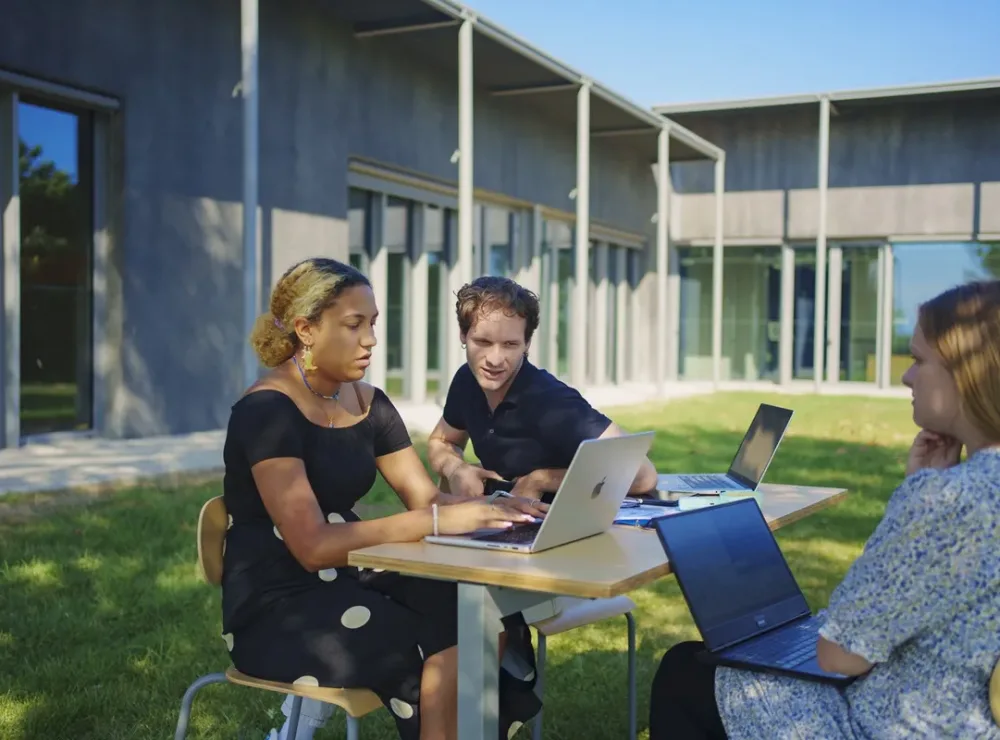
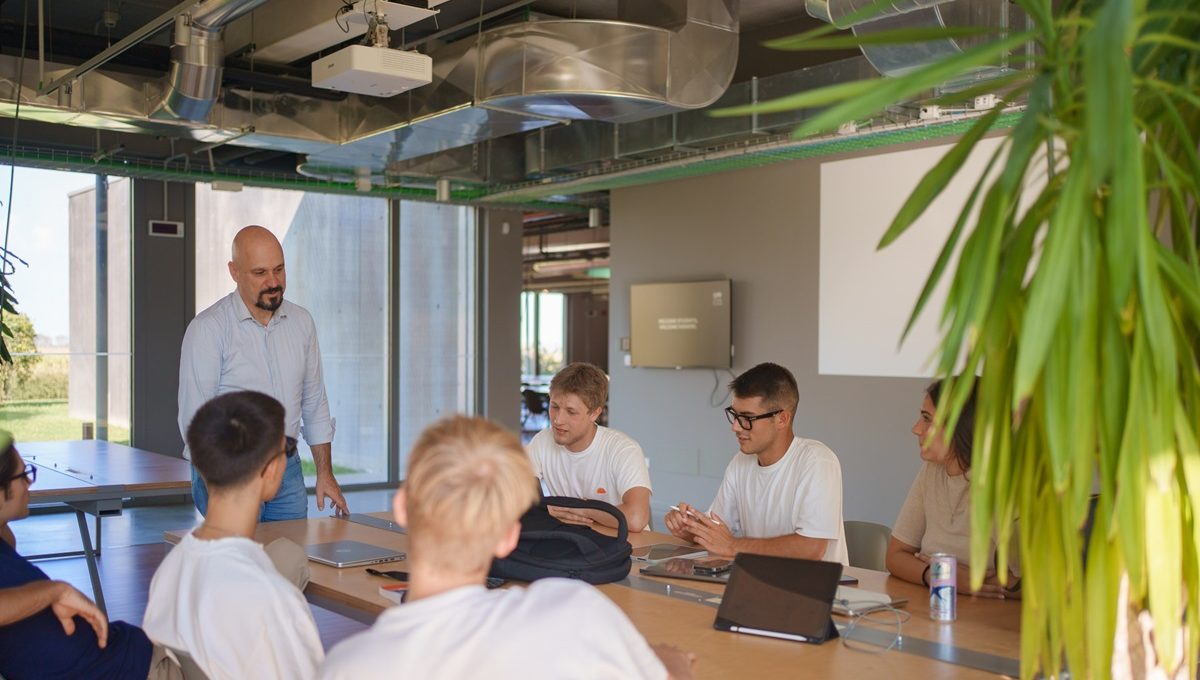
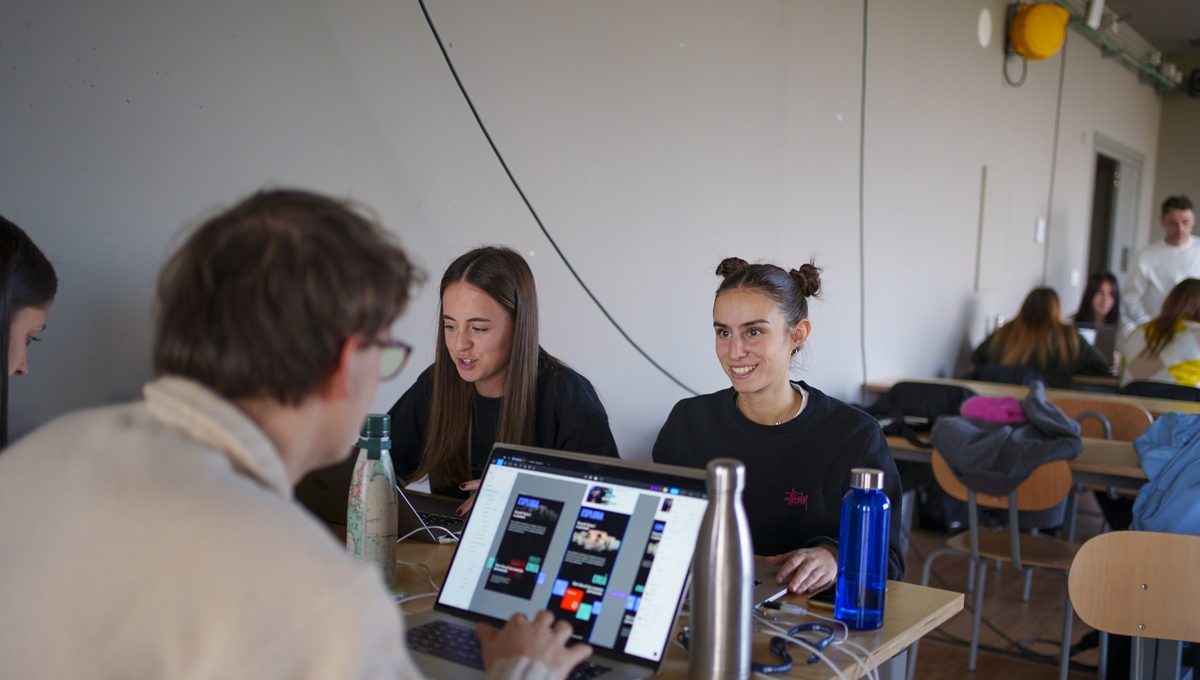
At H-FARM College, Design Thinking isn’t a chapter in the curriculum: it’s part of the way we study. Our campus in Roncade, just a short drive from the Venetian Lagoon, is built to foster design thinking, with open spaces, prototyping labs, classrooms where lectures become workshops. A faculty of entrepreneur-educators guides multidisciplinary teams that include students from 30+ nationalities.
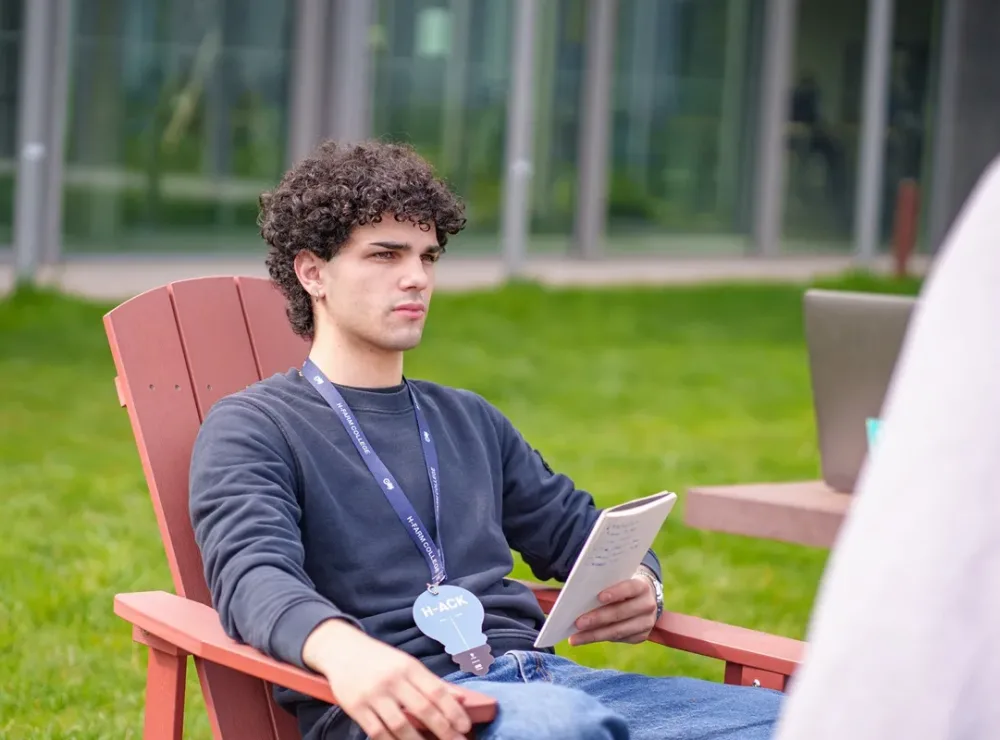
Company Challenges and Hackathons on the Roncade Campus
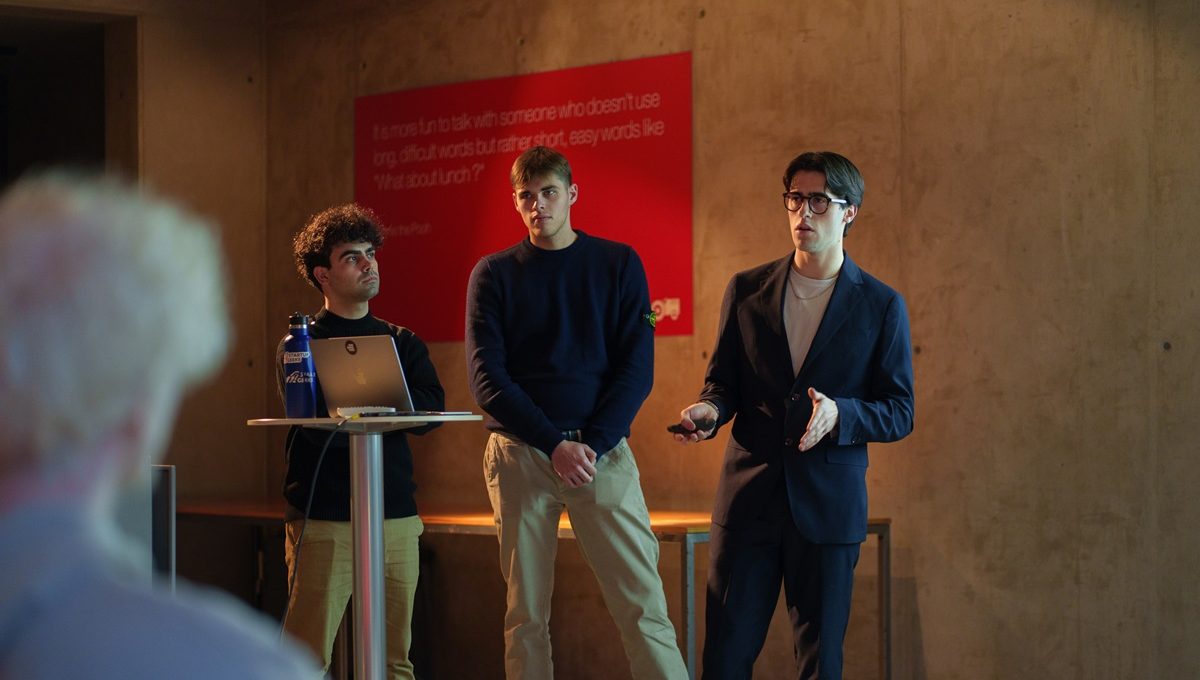
The Roncade campus is home to constant challenges with partner companies. In the recent challenge with The Lux Collective, students applied Design Thinking to the SOCIO hotel brand, designed to attract “social nomads”: people who experience work, personal life and relationships as integrated dimensions. Teams redesigned spaces able to adapt to different moments of the day, defined new USPs and rethought the full user journey, from booking to in-hotel experience.
In the “Think Pink, Think Different” challenge with Campari Group, supervised by the AKQA agency, students developed narratives for the Sarti Rosa brand able to engage Gen Z and Millennials through digital campaigns, influencer marketing and brand activations. Every year the MAGICA Summer School also returns, funded by Horizon Europe, where international students use Design Thinking to solve problems linked to the UN Sustainable Development Goals. This is the arena where many students truly begin their career.
How Projects with Brand Partners in H-FARM’s Ecosystem Shape Market-Ready Professionals
H-FARM College’s added value is its ecosystem, alive for twenty years as a venture builder: a campus where startups, scale-ups and established companies coexist. Our Master’s Degree in Design & Communication is designed for those who want to become protagonists of creative innovation. Design Thinking is its connecting thread: every module, every project, every exercise puts the student in front of real challenges to tackle with method and creativity. Also our Master’s Degree in Digital Marketing & Data Analytics, developed with sponsoring partner WPP, also integrates a strong design thinking component into its curriculum. Living here means joining an international community that never stops: to really understand what the student experience looks like, take a look at campus student life, filled with student clubs, events, hackathons and moments of exchange that constantly fuel collective creativity.
If you’re fascinated by the idea of turning complex problems into concrete, human solutions, Design Thinking can become your gateway to the future of digital. Book your spot at our next Open Day or contact the H-FARM College team to discover the right path for you.
FAQ


Absolutely not. Design Thinking is a problem-solving approach applicable across industries: business, tech, marketing, healthcare. It is designed for anyone who wants to innovate by putting users first.
The five classic stages are: Empathize, Define, Ideate, Prototype and Test. It is not a linear process but iterative, where you revisit earlier stages to continuously improve the solution.
Design Thinking is a broad, flexible innovation framework, while a Design Sprint is a structured 5-day process created by Google Ventures to rapidly validate a specific idea.
Theory is a starting point, but real competence develops through practice. Workshops, hackathons and real-world projects are the best way to internalize this creative problem solving method.
H-FARM College programs include hackathons, company challenges (with partners like The Lux Collective, Campari Group and WPP) and hands-on labs where Design Thinking is applied to real problems. The Master in Design & Communication is built around this approach.




 Back
Back

