How to Become a Product Manager: A Complete Career Guide

Think about the app you opened as soon as you woke up this morning. The one that reminded you of your meetings, the one you paid for coffee with, the one you scrolled on before even getting out of bed. Every button, every notification, every flow that feels so natural didn’t happen by chance: someone decided it had to be exactly like that. And that someone, more often than not, is a Product Manager.
The Product Manager is one of the most strategic figures in today’s digital world. They’re the orchestra conductor who coordinates technology, design, marketing and data to turn an idea into a product people actually use. In a world where tech companies rise and fall based on their ability to ship better products faster than the competition, Product Managers have become one of the most sought-after roles in the market.
In this article you’ll discover what a Product Manager really does, what their day looks like, how much they earn and how you can start building the path to becoming one. We’ll also tell you why H-FARM College, with a 50-hectare campus in Roncade and an ecosystem active since 2005 as a venture builder, is one of the few places in Italy where you can train for this role by working on real products of real companies.
Who Is a Product Manager and Why They Are Essential in Tech
A Product Manager owns the vision, strategy and success of a digital product. They’re not purely technical, not purely marketing, not purely design: they’re the figure who brings all of these worlds together and aligns them around a single goal. They’re often called the “CEO of the product,” even though they don’t have hierarchical authority over teams: their leadership is built on influence, vision and decision-making.
In practice, a Product Manager asks themselves three questions every day: what are we building, for whom, and why. The answer to these questions drives choices that impact millions of users. If Netflix changed the way you watch series, if Spotify suggests the perfect playlist, if your online bank lets you open an account in five minutes instead of five days, there’s a Product Manager behind it who decided how that experience should work.
The Product Manager in the Context of Startups and Innovation
In startups, the Product Manager is even more central. When resources are limited and every sprint can make the difference between growth and closure, whoever manages the product needs to make fast, data-driven decisions. They have to sense which feature to ship first, which to delay, what the market is truly asking for and what is just noise.
In larger companies, Product Managers work on complex product portfolios, coordinate multidisciplinary teams and interface with senior stakeholders. In both contexts, however, the same promise holds: turning an idea into something people love to use.
What Does a Product Manager Do: Daily Responsibilities and Core Skills
A Product Manager’s day rarely looks like the one before. Mornings often start with reviewing metrics: how many new users the product acquired, which features are used most, where users get stuck and drop off. Numbers are the starting point of every decision.
Throughout the day, work splits between strategic and operational activities. You might spend an hour with the design team reviewing a wireframe, then join a stand-up with developers to unblock a feature, then prepare a presentation for management about the next quarter’s roadmap. In the afternoon you might interview a user, analyze A/B test results or write user stories for the next sprint.
From User Research to Roadmapping: Key Activities
Product Managers have three main areas of responsibility. The first is discovery: understanding what users truly need through interviews, surveys, data analysis and observation of real behavior. The second is definition: translating insights into a clear roadmap, prioritizing features that deliver the most value with the least effort. The third is delivery: working side by side with technical teams so that what was planned gets built well and on time.
On top of this come cross-cutting skills like communication (you need to speak the language of engineers, designers, marketers and CEOs), negotiation (since different priorities constantly collide) and analytical thinking (every decision must be backed by data, not opinions).
Product Owner vs Product Manager: How They Differ
A common source of confusion is the difference between Product Manager and Product Owner. The Product Manager works at a strategic level: defining product vision, studying the market, engaging with the business. The Product Owner is a more operational role, typical of Agile methodologies: managing the backlog, writing user stories and working closely with the development team day by day.
In many companies these two figures coexist and complement each other. In others, especially leaner startups, they merge into a single person. If you want to dive deeper into modern software production, you can read our article on the Full Stack Developer, a figure that PMs collaborate with daily.
Key Product Management Skills to Build a Successful Career
A Digital Product Manager lives at the intersection of three worlds: business, technology and user experience. Being excellent in only one isn’t enough: you need solid foundations in all three, plus the ability to switch between them fluidly.
Hard Skills: Data Analysis, UX, Agile Methodologies
On the technical side, a Digital Product Manager should master analytics tools like Google Analytics, Mixpanel or Amplitude, understand SQL to query databases, know the basics of API design and feel comfortable with business intelligence dashboards. They don’t need to write code, but they need to know what’s technically feasible and how long it takes.
On the UX side, you need basics of user research, familiarity with prototyping tools like Figma and a sensitivity for interaction design. On the methodological side, Scrum, Kanban and product frameworks like Jobs-to-be-Done, OKR or RICE scoring are part of the daily vocabulary.
Soft Skills: Leadership, Communication and Strategic Thinking
But Product Management is above all a people job. You need to build consensus in a room where everyone has different priorities, you need to say no with grace when someone asks for a feature that won’t drive value, you need to pitch your vision to the CEO in five minutes without losing their attention. The ability to think strategically, anticipate problems and communicate clearly is what separates a good PM from an exceptional one.
The H-FARM College team is ready to help you figure out whether this is the right path for you: reach out for a personalized consultation and let’s shape your entry into the digital world together.
Product Manager Salary: What to Expect Across Markets
Product management salaries are among the highest in the digital world, because the role carries enormous responsibility and demand exceeds supply. In Europe, entry-level Product Managers typically start between €35,000 and €50,000 gross per year. With a few years of experience and concrete projects in their portfolio, the curve steepens quickly.
Junior, Mid and Senior: Career Path and Growth
Career paths in product management usually unfold across three tiers. Junior Product Managers (0-2 years) land between €35,000 and €50,000 in most European markets, often in startups or mid-sized companies. Mid-level PMs (3-5 years) earn between €55,000 and €75,000, with peaks in major tech companies. Senior Product Managers (5+ years) regularly exceed €85,000-€100,000, and Head of Product or Chief Product Officer roles go well beyond €130,000.
In global tech hubs the numbers climb higher: in Silicon Valley a Senior PM can reach $200,000-$280,000 excluding stock options and bonuses. In European hubs like Berlin, London or Amsterdam, salaries sit at intermediate levels, typically 30-40% above the Italian average.
How to Become a Product Manager: Education, Experience and Certifications
There’s no single way to become a Product Manager, but some paths work better than others. The most natural route is a university program that combines business, technology and digital innovation, followed by hands-on experience in startups or tech companies. Many successful PMs started as analysts, marketers, developers or designers before specializing in product management.
H-FARM College’s Project-Based Approach: Working on Real Products from Year One
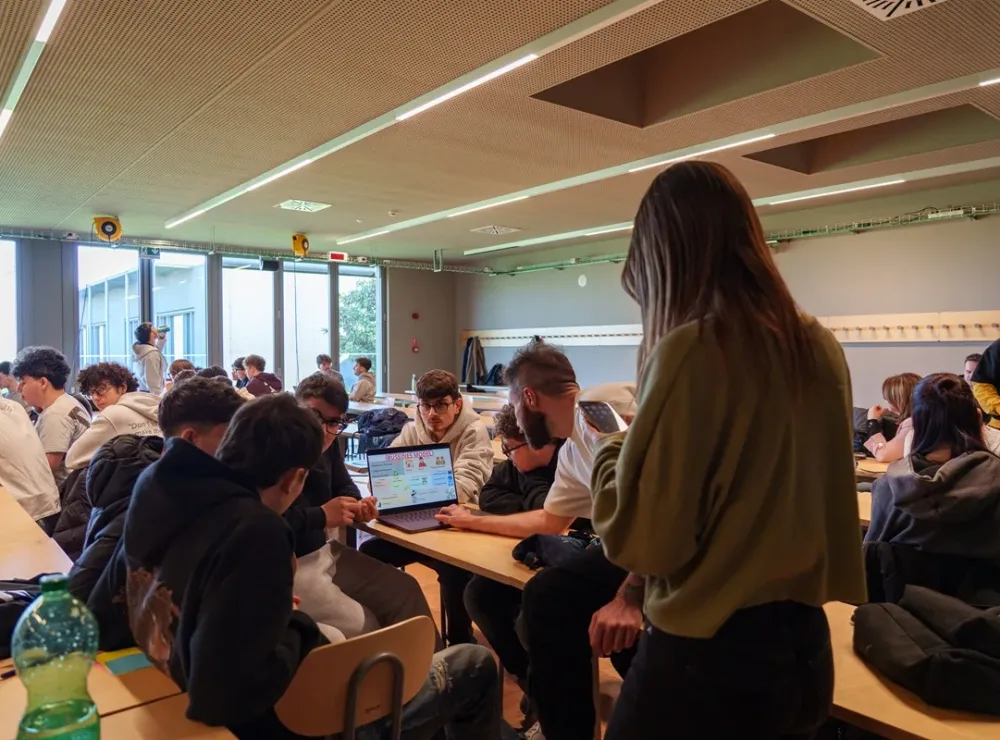
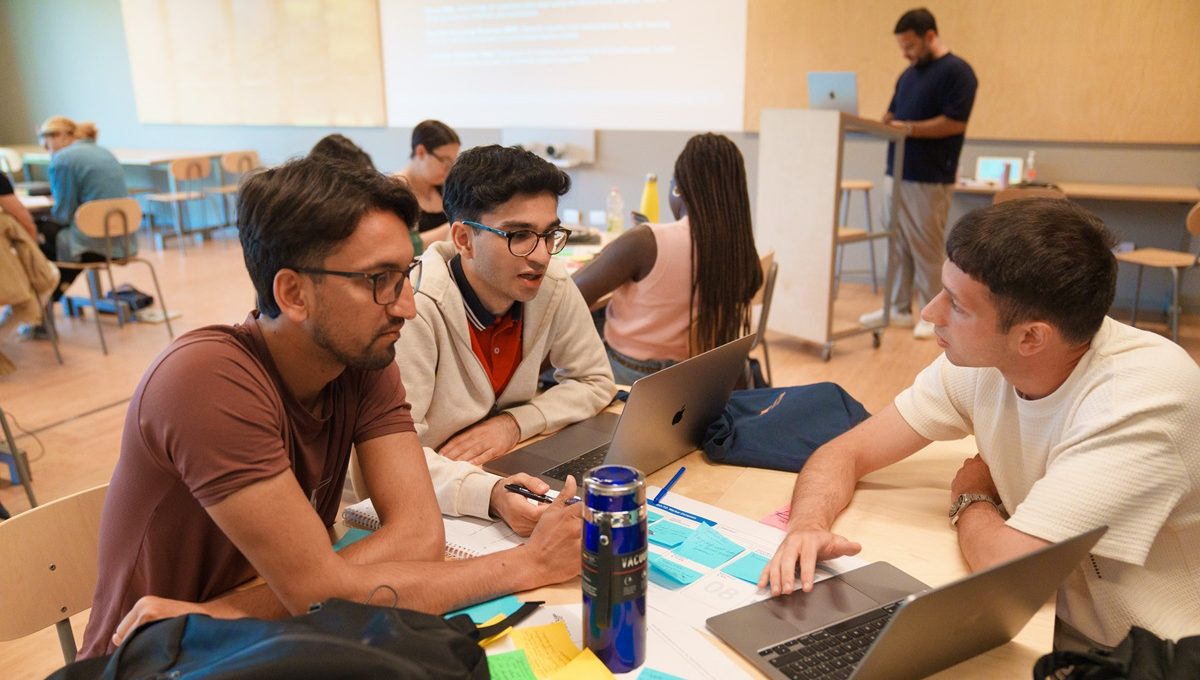
At H-FARM College, we believe product management is learned by doing. That’s why our approach is project-based: starting from the very first year, students work on briefs brought directly by partner companies. Think of the recent Challenge with The Lux Collective, where students redesigned the hotel brand “SOCIO” by defining new USPs for “social nomads” and designing evolving spaces capable of adapting to different moments of the day. Or the “Think Pink, Think Different” Challenge with Campari Group, where teams came up with strategies to engage Gen Z and Millennials around the Sarti Rosa brand.
These aren’t exercises: they are real briefs, with real stakeholders, with juries made up of professionals such as Global Brand Managers of multinational companies. It’s the perfect training ground to learn the craft of a Product Manager.
How Project Work with Companies in H-FARM’s Ecosystem Accelerates a Product Management Career
The H-FARM Campus in Roncade is a one-of-a-kind ecosystem in Italy: 50 hectares of parkland where startups, scale-ups, corporates, venture capital firms and a community of students from 30+ nationalities coexist. Students access the Entrepreneurship & Startup Center, take part in Red Bull Basement, collaborate with companies on real projects, and meet high-profile guest speakers — in April 2026, for example, Nobel Prize in Physics laureate Carl Wieman was hosted on Campus for a talk on the future of STEM education — and much more. To really feel the atmosphere of the campus, take a look at student life here: from student clubs to Job on Campus roles, everything contributes to shaping a Product Manager already used to thinking as part of a multidisciplinary team.
Building Your Product Management Career with H-FARM College
The Bachelor’s Degree in Digital Management, offered in partnership with Ca’ Foscari University of Venice, is designed specifically for future Digital Product Managers. It combines business and management fundamentals, digital and technological skills, innovation methodologies and a strong practical component made of challenges, internships and project work. Graduates from past years are now working as Digital Managers, Product Managers, Innovation Managers and Startuppers thanks in part to the connections built during the program.
Choosing H-FARM College means preparing to be a protagonist of digital change, acquiring that entrepreneurial mindset that makes all the difference in product management. Ready to stop using digital products and start building them? Book your spot at our next Open Day or contact the H-FARM College team to discover how to begin your journey on our campus.



FAQ


A Product Manager owns the vision and strategy for a digital product. They coordinate engineering, design and marketing teams to ship features that solve real user problems, from user research to roadmapping.
Not necessarily, but understanding technical fundamentals helps you make better decisions and communicate effectively with engineering teams. Analytical thinking and communication remain the most valued product management skills.
A Product Manager defines the strategic product vision and works at a macro level, while a Product Owner operates more tactically, managing the backlog and working directly with the development team.
In Europe, entry-level Product Managers earn around €35-50K, while senior PMs can reach €85-100K+, depending on the company, sector and market. The figures climb significantly higher in global tech hubs such as Silicon Valley or London.
Through programs that combine management, analytics, and digital innovation, students develop the hybrid skills the market demands. Challenges with companies such as Campari Group and The Lux Collective allow them to experience the role in real-world contexts starting from the very first year.






 Back
Back

