The Nobel Prize in Physics winner Carl Wieman meets students on campus
The H-FARM Campus welcomed Carl Wieman, Nobel Prize in Physics laureate and a professor who has long been engaged in research on learning sciences and educational innovation, for a meeting focused on how people develop complex skills and what it concretely means “to learn.”
A physicist by training, Wieman received the Nobel Prize in 2001 for his pioneering contribution to the field of atomic physics and Bose-Einstein condensation. In recent years, he has focused his work on science education, studying how to make learning more effective through approaches based on experimental evidence.
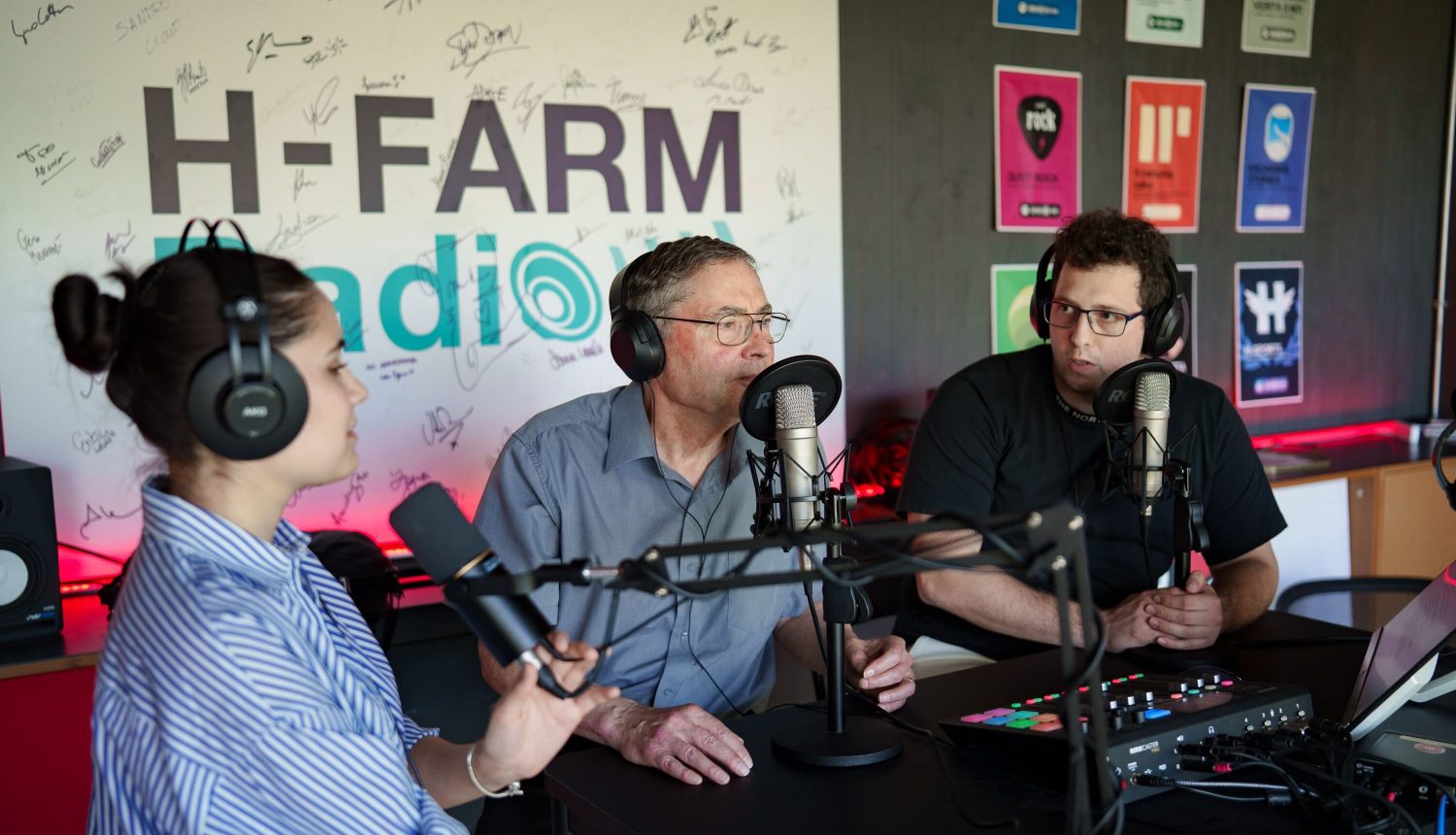
The day began in the H-FARM Radio house, where Wieman was interviewed by H-FARM College students Marco Dal Mas and Didar Topcuoglu. The interview created a moment of direct and spontaneous dialogue, during which the Nobel laureate shared anecdotes from his journey between scientific research and the study of cognitive processes, answering students’ questions.
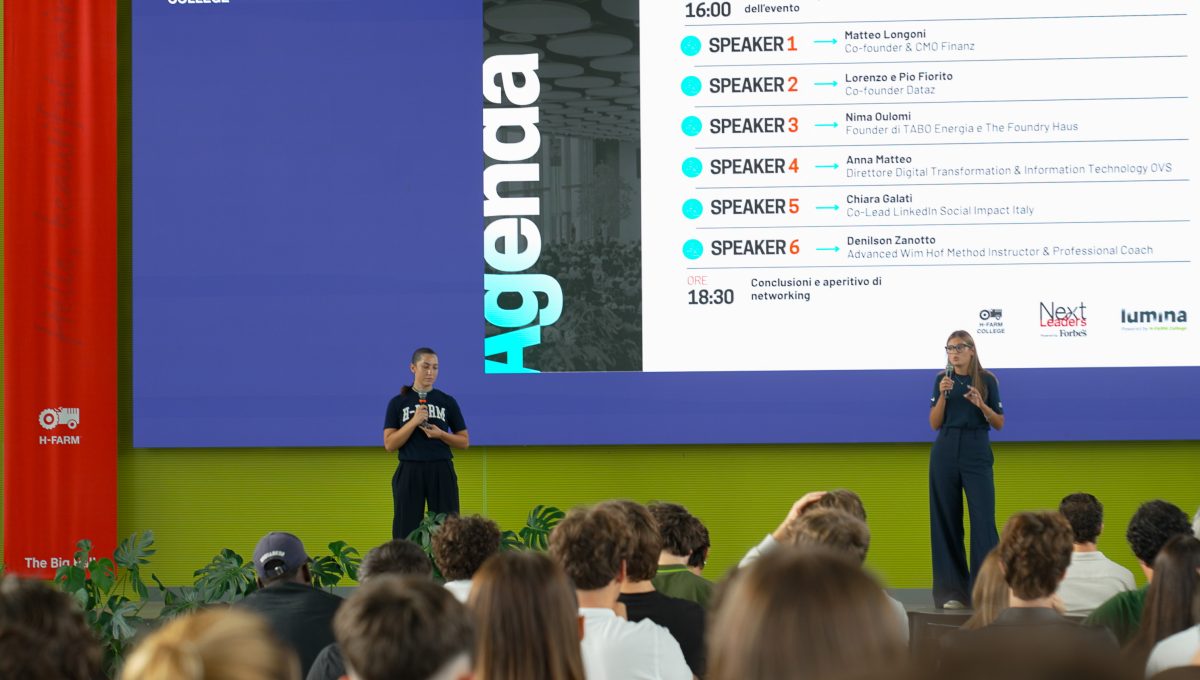
Afterward, Wieman delivered a highly attended talk in the Campus Big Hall, presenting a research-based perspective on how human learning works.
At the core of his talk was the idea that learning does not mean passively accumulating information, but actively modifying neural connections through intense cognitive engagement. In this process, the quality of thinking and the level of attention play a decisive role.
Wieman emphasized how traditional methods based on frontal lectures and passive study have limited effectiveness in developing deep competencies. In contrast, approaches such as deliberate practice—intentional, structured, and focused on continuous improvement—are far more effective in building lasting skills.
For H-FARM College students, it was a highly impactful experience that combined inspiration with scientific content, offering a direct look at how international research is reshaping the way we think about education.





 Back
Back

