Room to breathe: meditation course launches at H-FARM College
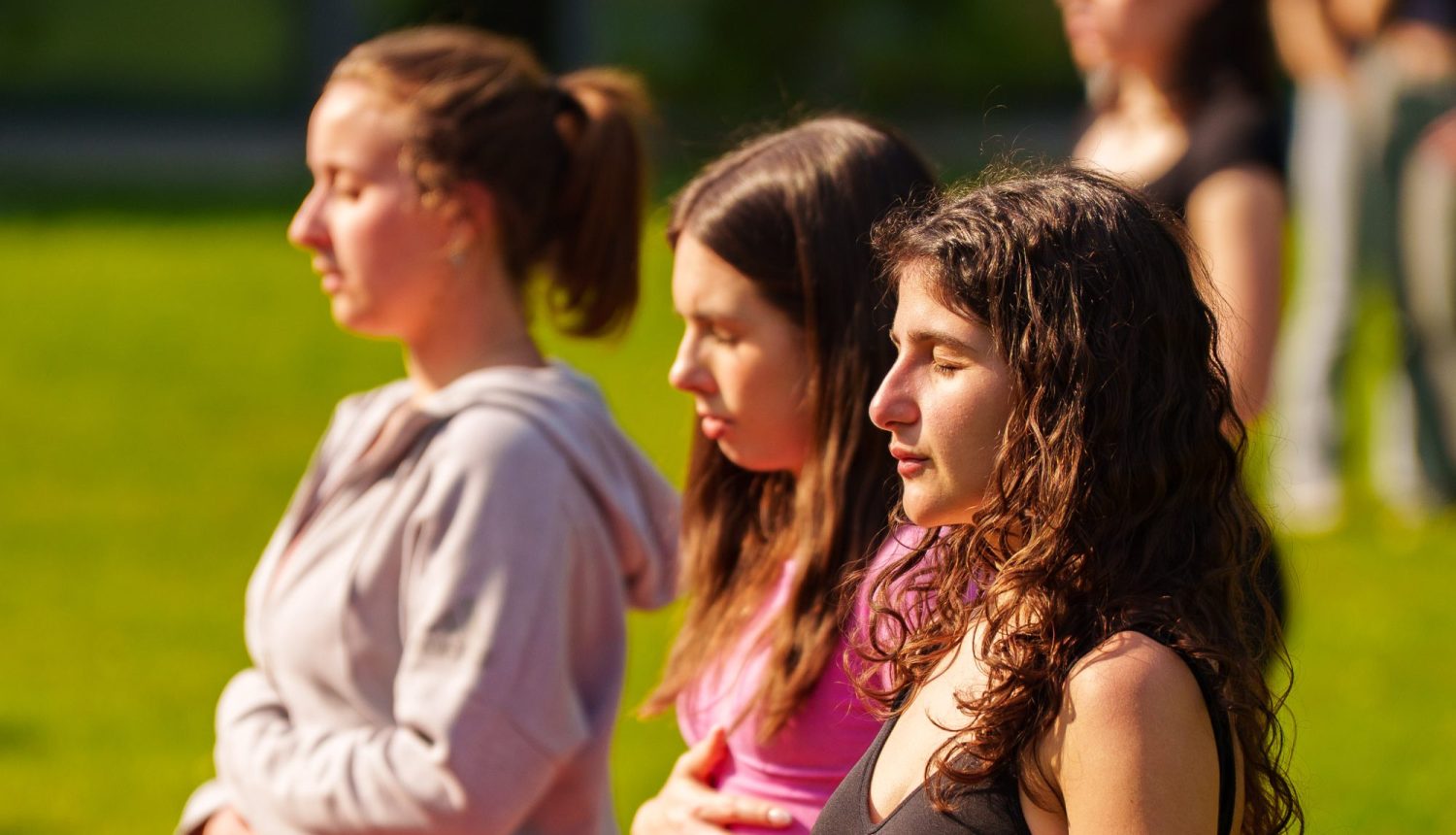
This academic year, the College has chosen to make room for meditation as part of its commitment to caring for students in every dimension of their growth. The practice is led by Raffaele Testorelli, Dean of Faculty, who has been meditating for many years and has taught meditation since 2007. We asked him to tell us about the value of this initiative.

I was drawn to meditation by a very simple question, one we all ask ourselves sooner or later: how can I stay clear-headed and present when everything around me is moving so fast? The path I chose, and have taught since 2007, is rooted in the tradition of Raja Yoga, the “royal yoga”, which works specifically on mastery of the mind through targeted breathing and concentration techniques. Bringing it here to the College this year felt like a natural step. We live in an extraordinary ecosystem, full of innovation, constant stimulation and ambitious projects. Giving students practical tools to manage their attention and find a space of silence doesn’t go against this energy. On the contrary, it’s what allows them to channel it without being overwhelmed by it.
In academia, we rightly focus on skills and mindset: what you can do and how you solve problems. But the quality of what we produce and the choices we make depend deeply on who we are and how we are. Through the breathwork and meditation of Raja Yoga, we offer students a safe space where they have nothing to prove, with no grades to earn and no performance targets to hit. Calming the breath and the mind lets us move beyond the noise of everyday life and reconnect with that inner dimension where our true direction, our values and our best selves reside. In terms of personal growth, this develops emotional intelligence, self-regulation and greater self-mastery, which are essential foundations for building any solid career.
Yes, in very concrete ways. Meditation doesn’t make the problems or pressing demands of the role go away, but it trains you to create a space between stimulus and response. When I have to make a complex decision or handle a tense moment, my practice helps me avoid reacting on instinct, hold back from snap judgments and truly listen to what the other person is trying to communicate, often beyond their words. In academic leadership, just as in business, the quality of our presence and listening shapes the quality of our decisions. Being fully present, even for a ten-minute conversation, completely changes the relationship.
I’d say it mainly invites them to see it differently. If we used meditation only as a “painkiller” to endure ever-heavier loads, we would end up feeding the very mechanism that generates anxiety. Instead, the practice teaches you to shift perspective. It lets you experience first-hand that you are not your thoughts, nor an exam grade, nor the outcome of a presentation. When, starting from breath control, you learn to observe anxiety as a passing phenomenon instead of identifying with it completely, pressure loses much of its paralysing power. At that point, paradoxically, you’re also able to tackle deadlines far more effectively and with greater clarity.
I’d like them, five or ten years from now, in the middle of a hectic day or at a professional crossroads, to remember that they always have access to a simple, powerful tool: their own breath as an inner anchor. I’d like them to know they don’t need to wait for a holiday to find their balance again, because they know how to reconnect with themselves in just a few minutes.
For readers, I recommend a small mindful breathing practice to try tomorrow morning, before you even pick up your phone. As soon as you wake up, sit on the edge of the bed with your back straight but relaxed. Breathe in deeply through your nose while counting to four in your head, hold the breath for a moment, then breathe out slowly, again through your nose, counting to six. Do this three times, bringing all your attention to the flow of air. The exercise takes less than a minute, but in Raja Yoga we know well that slowing the breath immediately slows the mind, so we can start the day with clarity instead of being at the mercy of events.






 Back

