AI Image Generation: How It Works and How It’s Changing Creative Work
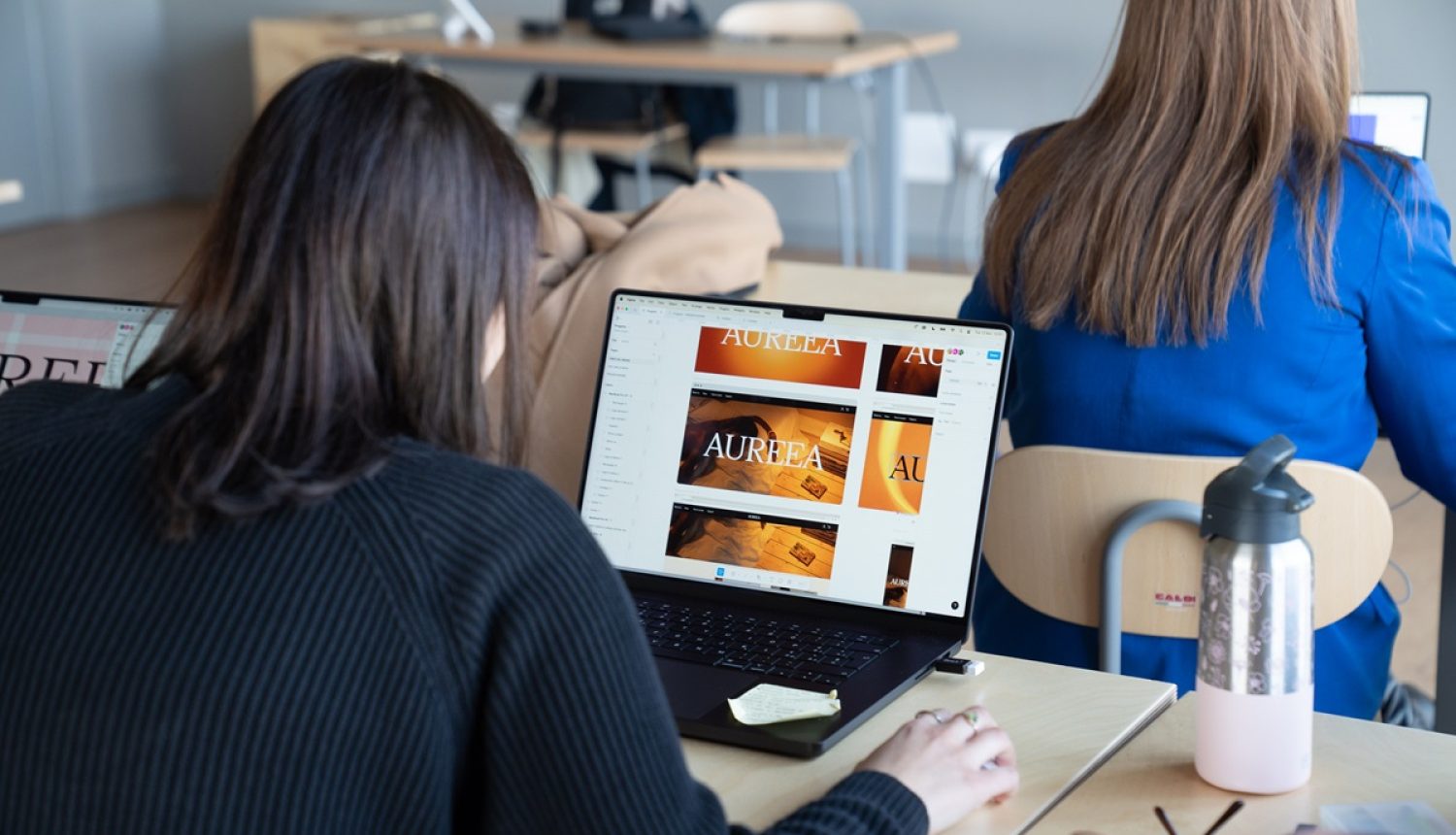
An AI image generator is software that creates images from a written description, called a prompt. Most use diffusion models: neural networks trained on billions of text and image pairs that turn random noise into an image matching your request. Today they are everyday tools for designers, illustrators and animators.
Have you ever typed a sentence and watched an image that never existed appear in seconds? It works like a sculptor removing material: it starts from a shapeless block of noise and refines it, step after step, until it looks like what you described.
Here we focus on images and the creative workflow. For the general definition of generative AI, read our guide on what generative AI is.
What is an AI image generator
To understand how an artificial image is born, it helps to start from the steps the software goes through and the history that led here.
From text to image: what happens when you write a prompt
When you hit enter, the generator goes through four steps. Here they are in sequence.
- Prompt: you write a description of the image you want.
- Text encoding: the model converts the words into numbers that capture their meaning.
- Denoising: starting from random noise, the model removes it over many steps, guided by the text.
- Final image: after the last step the image appears, and you can refine it with new instructions.
From DeepDream to Midjourney: a short history of AI images
In 2015 Google released DeepDream, which turned photos into hallucinated images. In 2021 OpenAI showed DALL·E, one of the first large models to generate images from text.
In 2022 Midjourney and Stable Diffusion arrived and image generation became available to everyone. Since 2025 the feature is built directly into chatbots and assistants such as ChatGPT and Gemini.
How AI image generation works
Behind every image there is a mathematical model trained on large amounts of data. Here is how it works and what its limits are.
Diffusion models: turning noise into images
A diffusion model is a neural network that learns to create images starting from noise. During training it adds noise to real images and learns to remove it; when generating, it does the reverse, guided by your prompt.
To understand the basics, read how neural networks work.
Training data, styles and limits
A model reproduces what it has seen: styles, compositions and also biases present in its training data. That is why results can look stereotyped, and quality depends on the variety of the data.
The most common limits are precise control of details and composition, keeping the same character consistent across images and text inside the image. Recent models have reduced them, but not removed them.
The best AI image generators compared
The market for tools changes every few months, but the basic differences stay: style, control, integrations and usage licenses.
Midjourney, Nano Banana, ChatGPT Images, Adobe Firefly and Stable Diffusion
There is no single best tool: each excels in a different context. This table compares them.
| Tool | Strengths | Best for | Commercial use |
| Midjourney | Aesthetic quality and artistic style | Concept art, moodboards, illustration | With a paid plan; larger companies need higher plans |
| Nano Banana (Google Gemini) | Photorealism, editing with reference images, character consistency | Mockups, conversational editing, variations | Under Google’s terms; images carry the invisible SynthID watermark |
| ChatGPT Images (OpenAI GPT Image) | Prompt adherence, conversational editing, text in images | Quick ideas, graphics with text, touch-ups | Under OpenAI’s terms and your plan |
| Adobe Firefly | Photoshop and Creative Cloud integration, training on licensed content | Professional and brand workflows | Designed for commercial use; check plan and license |
| Stable Diffusion | Open-weights model, runs locally and can be customized | Fine-tuning, full control, privacy | Free community license under $1 million in annual revenue, a commercial license above |
How to write a good prompt for AI images
A good prompt describes five elements: subject, style, composition, lighting and format. The more specific it is, the more control you have. Many tools also let you start from a reference image.
- “Portrait of a designer in a bright studio, photographic style, natural window light, half-body shot, 4:5 format.” Subject: the designer; style: photographic; light: window; composition: half-body; format: 4:5.
- “Flat illustration of a city at night, purple and orange palette, top-down view, poster style, 16:9 format.” Subject: the city; style: flat illustration and poster; colors: purple and orange; composition: top-down; format: 16:9.
- “Packaging for a fruit drink, white background, studio lighting, front view, soft shadows, square format.” Subject: the packaging; light: studio; composition: front view; details: soft shadows; format: square.
AI images in creative work: how designers and animators use them
Designers, illustrators and animators use AI images in different ways, with rules worth knowing. Here is how they enter the workflow and which ethical and legal points to consider.
Graphic design, illustration, animation and film
In the early stages of a project AI images help explore: moodboards, concept art, storyboards and variations of the same idea. A designer can try ten directions in an hour and choose which one to develop.
In animation and film they support previsualization of scenes and environments. Creative direction, style consistency and final control stay with the professional, who refines the result in tools like Photoshop.
Ethics, copyright and the AI Act: what you need to know
Copyright
Rules differ by country. In Italy, Law 132/2025 protects works created with the help of AI only when they result from the author’s own intellectual work. An image generated from a single prompt, without a relevant human creative contribution, may therefore not be protected.
The AI Act and content transparency
The transparency obligations of Article 50 of the EU AI Act apply from 2 August 2026. Among other things, they require generative systems to mark synthetic content in a machine-readable way and deepfakes to be disclosed. For systems already on the market, the marking requirement applies from 2 December 2026.
This is not legal advice: for professional projects, always check licenses and obligations with an expert.
Skills you need to work with AI in creative fields
Tools change fast, core skills do not. You need visual language, the ability to give creative direction and iterate with method, and a critical eye to choose and correct results.
Editing in Photoshop or Figma, knowing the limits and usage rights of models and the basics of how neural networks work also matter. People who combine taste and tool mastery become irreplaceable.
The programs of the Creativity, Arts & Design department put these tools in students’ hands on real projects.
Study design, animation and AI at H-FARM College
At H-FARM College AI is learned by using it on real challenges, next to creatives, technologists and partner companies. It is not about collecting tools: you learn to give creative direction, to choose what to keep from what AI generates and to take the result all the way to a finished project.
You are guided by faculty who are industry professionals. Alongside the core classes you can add enhancing courses, extra-curricular programs updated every year, to build the skills the market asks for most.
The Creativity, Arts & Design department brings together the College’s creative programs. The BA in Animation, Design & Visual Arts is the three-year path to start from design and animation. After your degree you can specialize with the MA in Design & Communication with AI, which combines design, communication and artificial intelligence, or with the MA in Film & Animation if your path is the moving image.
The best way to know if a place is right for you is to see it up close. At the Open Day you meet the team and the people who live the College every day, and you can ask anything about programs and admissions. If you already have an idea of what you want to do after high school or your degree, the Admissions team can help you choose the right program: one conversation is often enough to turn curiosity into a plan. Pick a date and come meet us.
FAQ
frequently asked questions about AI image generation


Most AI image generators use diffusion models. These neural networks are trained on billions of image and text pairs and learn to turn random noise into an image that matches your description, called a prompt. Your text is turned into numbers that guide the model step by step until the final image shows up.
The most popular are Midjourney, Google’s Nano Banana in Gemini, ChatGPT Images, Adobe Firefly and Stable Diffusion. They differ in style, control over the result, usage rights and how they plug into other software. Adobe Firefly, for example, works inside Photoshop and is trained on licensed content, which matters for commercial projects.
It depends on the tool and on how you use the image. Every platform has its own license terms, and some free plans limit commercial use. In Europe, the AI Act adds transparency rules for AI-generated content, and copyright protection for images made only by AI is limited. For professional work, always check the terms of use.
A diffusion model is a neural network that learns to create images starting from noise. During training it adds noise to real images step by step and learns to remove it, and when it generates it does the reverse, guided by your prompt. It’s the technology behind Midjourney, Stable Diffusion and many AI image generators.
A good prompt describes the subject, style, composition, lighting and format. For example: “portrait of a designer in a bright studio, photographic style, natural window light, half-body shot, 4:5 format”. The more specific the prompt, the more control you have. Many tools also let you start from a reference image.



 Back

