What Is Vibe Coding? How It Works and Why It’s Changing Programming

Vibe coding is a way of building software by describing what you want in plain language and letting an AI model write the code. The term was coined in February 2025 by Andrej Karpathy, one of the co-founders of OpenAI. The developer guides, tests and fixes the result instead of writing every line by hand.
Have you ever had an idea for an app and then stopped at the first obstacle, the code? Vibe coding moves that obstacle: it is like running a building site where AI lays the bricks and you decide where the wall goes.
The trend is real: in the 2026 Stack Overflow Developer Survey, with more than 30,000 responses from 169 countries, 66% of developers use coding assistants or agents and only 17.2% say they use no AI tools. This guide covers definition, origin, how it works, tools, risks and what it means for developers.
What is vibe coding: meaning and origin of the term
To understand vibe coding, it helps to start from where the term comes from and what sets it apart from other ways of creating software.
From Andrej Karpathy’s post to a global trend
On 2 February 2025 Andrej Karpathy, an OpenAI co-founder and former head of AI at Tesla, described a new way of programming in a post on X. He called it vibe coding: you give in to the “vibes” and accept the code the AI proposes without reading it line by line.
The term spread within months. On 6 November 2025 Collins Dictionary named it Word of the Year, calling it “programming by vibes, not variables”. Over time its meaning has widened to cover any form of AI-assisted programming.
Vibe coding vs low code vs no code
Vibe coding, traditional programming and no code are three approaches to the same goal: creating software. This table compares them.
| Aspect | Vibe coding | Traditional programming | No code and low code |
| How you build | Natural-language prompts | Hand-written code | Visual interfaces with ready-made blocks |
| Control over the code | Medium-low if you don’t read the code | Total | Limited to the platform’s features |
| Prototype speed | Very high | Slower | High for standard cases |
| Skills required | Clear descriptions and the ability to verify | Programming and software architecture | Basic logic, no code |
| Main risks | Bugs, vulnerabilities, technical debt | Human error, long timelines | Constraints and platform dependency |
The profile that masters the whole stack, from front end to back end, is the full stack developer: see what a Full Stack Developer does.
How vibe coding works: from prompt to app
Vibe coding is not magic: it follows a clear loop and relies on language models and coding agents.
The describe, generate, test, fix loop
Vibe coding follows a simple loop. You describe what you want, the AI generates the code, you try it, then you report errors or changes and the AI fixes them. You repeat until the result works.
A hands-on example: a web app to track expenses
- Describe: you write “create a web page to record expenses with amount, category and date, and show the monthly total”.
- Generate: the tool produces a first version with a form, a list and a total.
- Test: you enter a few expenses and check that the total is correct.
- Fix: you ask for a category filter and for data to be saved in the browser.
- Polish: you ask to tidy up design and text, then read the code and run a security check before publishing.
The role of large language models and coding agents
At the base are large language models: models trained on large amounts of text and code that predict the most likely code for a given description. Coding agents go one step further: they edit several files, run commands and launch tests on their own.
To understand how agents reason, read our guide on AI agents and autonomous AI.
The best vibe coding tools
There are many vibe coding tools, aimed at different audiences. Here is how to find your way.
Cursor, Claude Code, GitHub Copilot, Replit and Lovable compared
Tools differ in working environment and the technical level they require. This table summarizes the most widespread.
| Tool | Type | Who it’s for | Technical level needed |
| Cursor | Code editor with built-in AI | Developers and computer science students | Medium-high |
| Claude Code | Anthropic’s coding agent | Developers working on existing projects | Medium-high |
| GitHub Copilot | Assistant and coding agent in editors | Developers already using VS Code or JetBrains | Medium |
| Replit | Browser-based development environment with an AI agent | Beginners and fast prototypes | Low-medium |
| Lovable | Prompt-to-web-app generator | Founders, designers, product managers | Low |
Pros and cons of vibe coding
Vibe coding speeds up work, but it demands attention to quality and security. Here are both sides.
Speed and fast prototyping
The main advantage is speed: an idea becomes a clickable prototype in hours instead of weeks. In the 2026 Stack Overflow Developer Survey, 74% of developers find AI useful or very useful for implementation and, when facing a technical problem, 70% turn to AI.
For founders and designers it means testing an idea with real users before investing in full development.
Security, code quality and technical debt
The main risk is accepting code you do not understand. In the 2026 Stack Overflow Developer Survey only 6.6% of developers said they would trust AI with an important decision, and about half trust its output when they can easily verify it.
Without review, generated code can contain vulnerabilities, unnecessary dependencies and architecture choices that are hard to maintain. Code review, automated tests and good DevOps practices reduce these risks.
Vibe coding for designers and creatives: from prototype to product
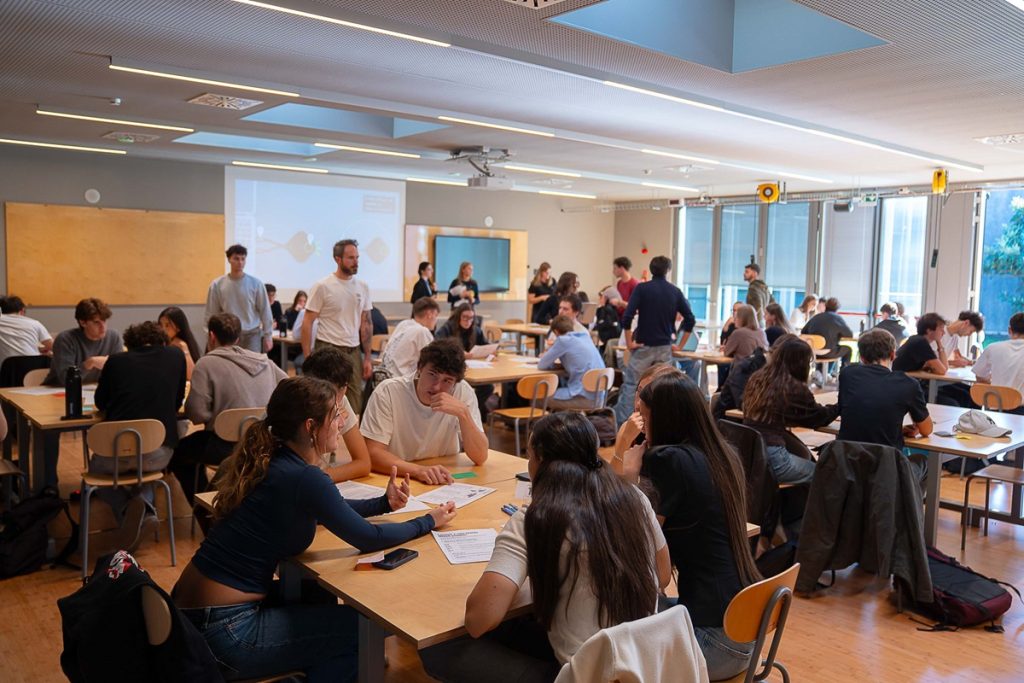
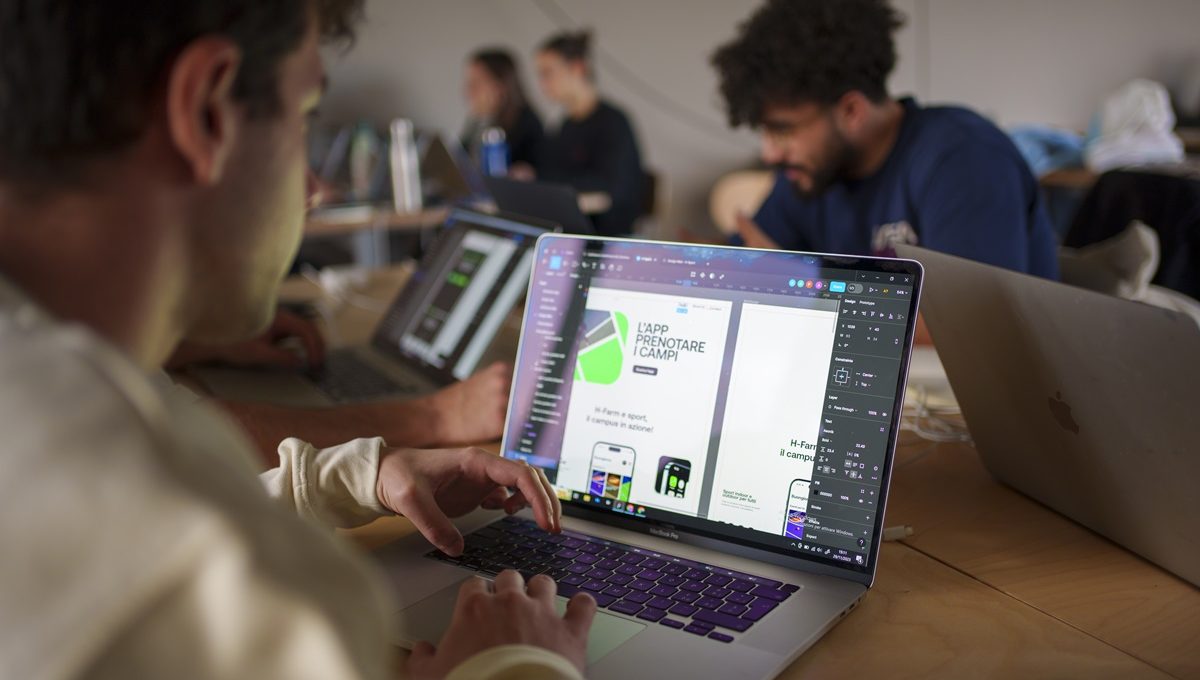
Vibe coding opens programming to people coming from design. A designer can turn a Figma layout into an interactive prototype, try an animation or build a landing page without waiting for development.
Going from prototype to product still needs technical foundations: understanding how code is built, how data is handled and how to publish safely. This is where design and technology meet in hybrid profiles, such as those trained in the BA in Product Design & Intelligent Technologies.
The future of developers in the vibe coding era
In February 2026 Karpathy himself separated vibe coding for experiments from professional work with agents, which he called agentic engineering. The message is that AI writes more and more code, but someone must design, check and answer for the result.
The developer’s role shifts toward architecture, review, testing, security and understanding the business problem. Software engineering skills become more strategic, not less.
The Innovation & Technology department brings together the College’s technology programs.
Learn to code with AI at H-FARM College
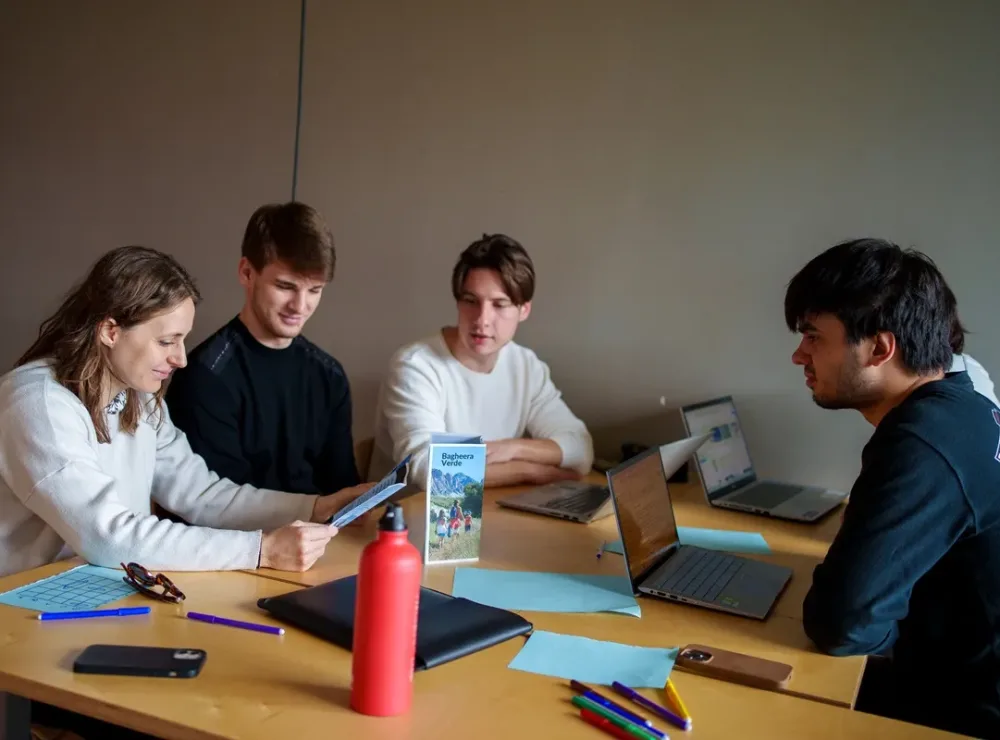
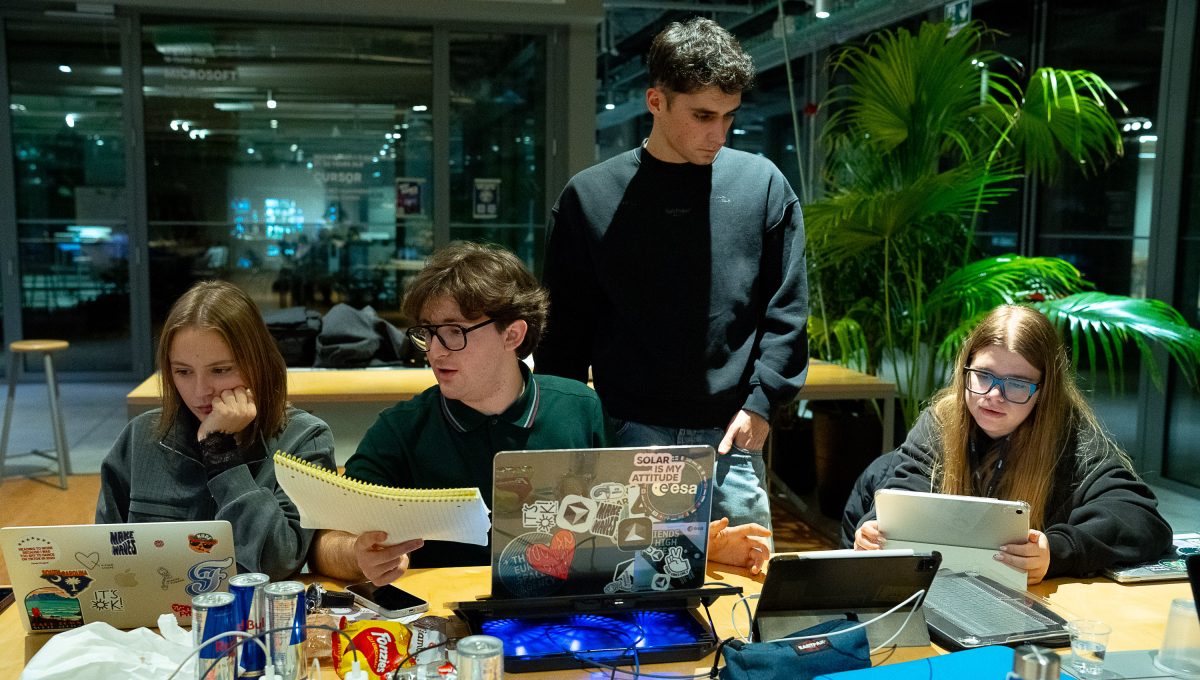
At H-FARM College you learn to build with AI on real challenges, next to developers, designers and startups. The goal is to train people who use AI to move faster but who also understand what is underneath: architecture, security and software quality.
You are guided by faculty who are industry professionals. Alongside the core classes you can add enhancing courses, extra-curricular programs updated every year, and group projects where you put what you learn into practice right away.
The Innovation & Technology department brings together the College’s technology programs. The BSc in Software and Cloud Architecture with AI builds the foundations of software development and cloud architecture, while the BA in Product Design & Intelligent Technologies combines design and intelligent technologies for those who want to design digital products. After your degree, the MSc in AI for Business Transformation brings AI into business processes, combining Python, machine learning, agentic AI and cybersecurity with strategic training.
The best way to know if a place is right for you is to see it up close. At the Open Day you meet the team and the people who live the College every day, and you can ask anything about programs and admissions. If you already have an idea of what you want to do after high school or your degree, the Admissions team can help you choose the right program: one conversation is often enough to turn curiosity into a plan. Pick a date and come meet us.



FAQ
frequently asked questions about vibe coding


Vibe coding is a way of building software by describing what you want in plain language and letting an AI model write the code. The term was coined in February 2025 by Andrej Karpathy, one of the co-founders of OpenAI. The developer guides, tests and fixes the result instead of writing every line by hand.
The most popular are AI coding assistants and environments like Cursor, Claude Code, GitHub Copilot, Replit and Lovable. Some work inside your code editor, others build full apps from a single prompt. The right pick depends on your skills and on the project, from a quick prototype to production software.
You can build prototypes and small apps with no experience, but real projects still need programming basics. If you don’t understand the code, it’s hard to spot bugs, security issues and bad architecture choices. Vibe coding works best as a speed boost for people who already know the fundamentals.
No, but it is changing their role. AI writes more and more code, while developers focus on architecture, code review, testing, security and understanding the business problem. Companies want people who can work with coding agents in a critical way. Software engineering skills become even more valuable.
The main risks are code that is hard to maintain, hidden security flaws, unnecessary dependencies and technical debt that grows fast. If you accept generated code without reading it, you may not know how your own software works. Code review, automated tests and good DevOps practices cut these risks.






 Back

